Monday, October 27, 2014

Maybe it's NOT my Responsibility

I've recently been experiencing a significant challenge in my personal life.  In truth it's something that I probably have been dealing with - in better or worse fashion - for the past ten years.  Unfortunately, it's come to a bit more of a head in the past year.  At the same time it was also vigorously pointed out to me by one of my trusted confidantes that perhaps I'm taking too much of an ownership position on this particular issue and by doing so not only am I doing great damage to myself (e.g., emotionally, psychologically, spiritually, even physically) but I'm not permitting or even demanding appropriate engagement and involvement of others in the situation - others who probably have a better chance of addressing the situation on a more permanent basis than if I come to the rescue every day.

It was a hard message to hear.  By my nature I am a problem solver, a fixer, and as soon as an issue is presented I go into fix-it mode.  I can't help myself.  In essence, I presume that by someone simply experiencing an issue or venting about a challenge it is tantamount to an invitation to come to the rescue.  You need not worry about explicitly asking for my help or input.  I'll be engaged from the moment you complete your first sentence.

This personal "ah ha" moment caused me to reflect on the number of scenarios that have been presented to me in my coaching engagements over the years.  Frequently I'm helping my clients make sure that they understand what is truly in their control and what is not.  Just as frequently, we are also working through how we can establish appropriate ownership over the issues and challenges they face on a day-to-day basis.  For most of the leaders I have worked with, they have risen to their positions precisely because they can be relied upon to get things done, to make things happen, and to solve problems.  What they discover as they rise through the ranks though is that the same tools, techniques, and behaviors that made them successful in the past can actually be very detrimental to their future success.

Adhering to an approach of "I Solve All" leads to a significant number of negative impacts for any leader.  For one, the types of issues and challenges that one faces as you move up in an organization become more complex, sensitive and time consuming.  Your ability as an individual to successfully solve these problems on your own becomes significantly more challenging - even impossible - unless you adopt new tactics.  Moreover, if you are unable to change tactics you will almost certainly find yourself incapable of dealing with multiple tasks and issues at the same time.  You simply don't have the time or physical capacity to deal with multiple issues or challenges simultaneously.  It's not to say that we don't try to make it happen.  Often we congratulate ourselves - and are congratulated by others - for giving 110% or more, working longer hours and weekends, and dragging ourselves in while sick, to achieve the impossible.  As I noted for myself in my personal challenge, this often leads to being physically worn down and/or emotionally spent.

Just as significant, on a personal level, as you become known for or cement your position as a leader who solves all problems and takes on all comers, is the fact that "success" begets more work.  Your desire to be of service and/or your inability to say no actually doesn't help you make progress.  The more problems you seemingly solve, the more likely you are to be presented with more opportunities to be of service of others.  This not only leads to the personal exhaustion and frustration noted above, it quite frankly could put your own position/career at risk.  If you are so busy solving the problems of everyone else, it might be noted that you are not effectively carrying out your own duties.

Aside from these personal impacts, many leaders also need assistance understanding how their helping/servant approach actually does a disservice to the organization and the individuals that report to them.  In the desire to be of assistance, to make quick progress on issues and move on to the next challenges, the long-term impact is that we do not enhance the capacity and capability of our subordinates to solve and hone their own problem-solving skills.  In essence we are stunting their growth and the ability of the organization to grow and be more successful.  It may seem more challenging to mentor, support and develop capacity in our subordinates in the short-term, but unless we take that time we inevitably will continue our firefighting management throughout our tenure.  Pay now or pay later never held more true.

I'm a huge believer in the servant-leadership model, but the key here is to determine and evaluate how best to serve your staff and your organization.  And it may not be by jumping at every opportunity to solve a problem.  You might just have to overcome your innate desire to help and assist.  You might just have to pause long enough to figure out what is going to be the best long-term solution to the presenting problem.  And I know I have much to learn in this regard as well - both personally and professionally.  Your role - my role - as leader is not just to solve problems but to build capacity of the team for their benefit and for the long-term benefit of your organization.

Sometimes good leadership means asking more questions and saying NO more often.  That approach is not easy but the path of strong leadership seldom is.
______________________________

Greg Hadubiak, MHSA, FACHE, CEC, PCC
TEC Canada Chair/Executive Coach/Senior Consultant
hadubiak@wmc.ca

Helping leaders realize their strengths and enabling organizations to achieve their potential through the application of my leadership experience and coaching skills. I act as a point of leverage for my clients. I AM their Force Multiplier.

Tuesday, October 14, 2014

Selecting Your Executive Coach - Redux

The leaves are turning, Autumn is upon us, and Winter is just around the corner.  The change of seasons also signals what has become an annual tradition - a number of requests and interviews related to engaging me as an Executive Coach.  In a few circumstances, this follows the pattern established by large organizations relating to their annual intake for their leadership development program.  For other individuals, it represents a return from summer hiatus and a desire to refocus and ramp up their commitment to achievement of personal and professional goals.   I've seen and been a part of a variety of coach selection processes in the past several years.  I've also been on both sides of the selection process - picking an executive coach for myself and being selected by others to be their executive coach.  What I have experienced is that the processes - and the quality thereof - are as varied as the individuals and organizations involved.

If you are like most leaders I have worked with your understanding of executive coaching is pretty basic.  You are not quite sure what coaching is and sometimes you are not quite clear on what you want to achieve by engaging an executive coach.  Some of the most common reasons that I experience in individuals looking for a coach is that they are trying to overcome some personal or professional challenges (e.g., it's lonely at the top, barriers to professional advancement) or their organization is supporting coaching for their leaders.

Regardless of motivation or understanding, the next crucial step is trying to figure out how to select an executive coach that is right for you.  In my opinion, this is an effort that requires as much time, thought and process as we put into hiring any staff member, contractor, architect, or other professional resource.  I say that with a thought that all such other processes in your organization are approached with due vigor and diligence.  In many respects, there should be even more effort and structure to selecting an executive coach as what's at stake is your leadership effectiveness.  And in my opinion without effective leadership all other resources in an organization are vastly underutilized or even squandered.

So how can you maximize the opportunity available to you by getting access to and support of an executive coach?  How can you ensure that you choose the right coach for you?  Here are my top  factors and processes - not necessarily listed in order of importance - in making your best executive coach selection decision:

Number One:  get access to a bio or resume for a variety of coaches.  Get a sense of who they are and their track record.  Approach this just as you would any other recruitment process.  You are hoping to have a number of options to select from and to do that you need more than a few examples to choose from.  Your decision may even be informed by the multitude of samples and approaches you see coaches taking in responding to your requirements.

Number Two:  just like in any other recruiting process, try to gain some clarity for yourself in what you want an executive coach to do with and for you.  By way of analogy, it's a pretty daunting task to go looking for a Chief Financial Officer or IT Director if you have no idea what tasks you want them to focus on or what education and skills you need them to have.  The same holds true when selecting your executive coach.

Number Three:  following from above, make sure that the executive coaches that present themselves for your consideration are in fact qualified - by education and experience - to provide the requisite level of service that you are looking for.  I'll demonstrate my bias here in that I believe that qualified coaches are graduates of a program that establishes them as Certified Executive Coaches (CEC), are active members of the International Coach Federation, and tangibly demonstrate a commitment to advancing their coaching acumen.  They are well-trained and have an excellent track record of ongoing professional development.

Number Four:  get references from their current or past coaching clients.  If they have been able to have positive impact on others it's quite likely that these other clients will be more than willing to speak about their experience with you.  If the coach in question is on LinkedIn, look for endorsements and testimonials from their clients.

Number Five:  take the time to interview at least two to three prospective coaches.  Ask them your key questions.  Ask them to describe in detail their coaching process.  Ask them to describe in detail their successes and their failures (e.g., toughest assignment, learnings, whether they have been fired from a coaching engagement).  Ask them how they stay current in their coaching practice. This is a critical selection decision for you - take the time to get this decision right!  Make this a true and effective interview.  Don't speed-date your way to a decision.
While selecting your executive coach is a very personal decision one tactic that I have seen work well is some form of panel interview or input.  I remember one client in particular who involved a number of his direct reports in the selection process.  We do this in any other number of recruiting and selection processes so why not with an executive coach? 

Number Six:  be wary of coaches who over-promise or offer to solve your problems.  While you are definitely looking for confident and competent coaches with a track record of helping clients to identify, clarify and address your challenges, be clear for yourself that it is YOU who sets the agenda for the engagement, you are the one true agent of change, and you have the power and expertise to set your future direction.  In my opinion, if you are feeling that you are getting the hard sell than it's time to walk away from that engagement. 

Number Seven:  consider this an investment in your personal and professional leadership.  What is that worth to you?  What is it worth to your organization?  It may appear more than a bit self-serving on my part, but be wary of coaches who offer bargain-basement coaching rates.  While price is never a guarantee of quality (see other points in this list) it should give you pause to consider what you might be signing up for.  There may be a reason you can get coaching for less than the going rate.

Number Eight:  connection, connection, connection.  Despite whatever skills, qualifications, and references any coach might have, if you don't feel a connection to a particular coach I'd suggest not contracting their services.  This is an individual that you are going to have to feel completely comfortable in revealing all of your fears, anxieties and challenges.  You are going to have to be ready with this individual challenging you in each session and during the term of your coaching engagement.  If you don't feel a connection move on to other options.  This is about YOU and no one else.

This is a critical decision for your leadership.  You want the best resource available to you.  Don't settle.  Your executive coach can be one of your best resources in advancing your personal leadership so put in the time and effort into the selection process.  After all, it's about YOUR leadership.
______________________________

Greg Hadubiak, MHSA, FACHE, CEC, PCC
President & Co-Founder
BreakPoint Solutions
Executive Coaching and Business Consulting

gregh@breakpoint.solutions
780-250-2543

Helping leaders realize their strengths and enabling organizations to achieve their potential through the application of my leadership experience and coaching skills. I act as a point of leverage for my clients. I AM their Force Multiplier.


Monday, October 6, 2014

A Leadership Fable

Over the years, as I've progressed through various organizations and leadership roles I have had the opportunity to learn from and experience (directly and indirectly) the different styles that individual managers and leaders have brought to their roles.  Now, as an executive coach, I have had more opportunity to hear about either the challenges or inspiration that leaders bring to their followers on a daily basis.  More than ever what astounds me are those leaders that believe in the use of an iron hand, an unyielding adherence to "the rules" and even outright intimidation tactics with the expectation that this will somehow result in positive results - for their business units and/or themselves.


I'll admit that an early stage of my career, when I was inexperienced and learning a lot of lessons the hard way, it was quite convenient and reassuring to fall back on my title and authority as CEO and enforce discipline, mandate compliance with my directions, and otherwise suppress dissent.  It seemed easier to fall back on such authority when experience and knowledge were lacking, while pride and fear were at a premium.  As I've said many times since that first leadership role in particular with the benefit of 20+ more years of experience and the opportunity to learn from others, I'm amazed my board of directors at the time didn't fire me in my first year.  I can't say that I would have been as generous with my learning curve as they proved to be.

This reflection has been prompted by the current (ongoing?) experience of my peers and clients as they continue to manage in environments that don't exactly inspire and motivate.  As individual leaders themselves or as front line staff they have described too many of their bosses as draconian, manipulative, untrustworthy, and sometimes just downright mean.  Without a doubt there is method to this madness.  I've seen and experienced this type of leadership before.  The intent is to keep others off balance, reduce confidence of team members or colleagues who might otherwise present some sort of challenge, and to otherwise maintain or advance the career aspirations of themselves.  At the very least the intent is to ensure that the weakness of the boss doesn't see the light of day or establishes the basis by which someone else (e.g., a direct report, another division) can be blamed for lack of performance.

But surely there is a more rational and less destructive way to achieve one's leadership aims.  And there is.  Humility and self-awareness are good starting points!  Moreover, this is not just as a result of a new leadership theory that has come to light and been marketed in bookstores and business schools around the world.  Rather, there is a leadership fable that establishes the basis for learning if we are prepared to heed its lessons.  It goes as follows...

The Wind and the Sun were disputing which was the stronger.  Suddenly they saw a traveller coming down the road, and the Sun said:  "I see a way to decide our dispute.  Whichever of us can cause that traveller to take off his cloak shall be regarded as the stronger.  Given to bluster, the Wind demanded to go first, so the Sun retired behind a cloud and the Wind began to blow.  As the Wind blew the traveller pulled his cloak tighter about himself and hunched lower so as to be able to continue making progress.  The Wind redoubled his efforts, summoning all his strength, but to no avail.  The harder the Wind blew the more closely did the traveller wrap his cloak around him till at last the Wind was spent and gave up in despair.  Of course, the Wind suggested that the Sun give up as well as the cause was obviously hopeless.  The Sun smiled and thanked the Wind for his concern, but came out from behind the cloud nonetheless.  He let his rays fall down upon the traveller and gradually the warming heat became too much for the traveller who took off his cloak and  proceeded to walk upright and happily on towards his destination.  The Wind for all its effort and bluster had been defeated by the quiet glory of the Sun.


Could the "leadership" of the Wind prevailed given more time, energy or resources? Quite possibly.  None of us can personally sustain the kind of battering that can come from a hurricane and such a storm definitely makes its mark.  Even the strongest of us can eventually be beaten down.  We remember and remark on such storms for years to come, but mostly for the destruction it wreaked on the lives of those it impacted.  Not necessarily the kind of legacy we as leaders would aspire to - I hope.  Interestingly enough, if we take the analogy further, we sometimes do see some positives from these destructive storms/leaders as people band together to survive or recover from the experience.  In contrast, I warrant that we do aspire to be more Sun-like once we have had the ability to work with and be led by someone that shone their light on us, allowed us the freedom to work and grow, and ensured that the journey to our goal was spent enjoyably and productively. 

So as a follower you can choose to be battered by your personal Wind-like leader on a daily basis.  You might even look to others to pick up the pieces for you or even put their own cloak around you until the latest gale passes. You can choose to pick up the pieces of your work life each day and rebuild as we typically do after the tempest has struck once again.  Or perhaps today, or tomorrow, you make a different and harder choice, to either stand up and hold on to your cloak and stand for what you believe in or to pull up stakes and move to a different, less disaster-prone environment that allows your "home" to be built on more solid foundation.  And make no mistake, those are hard choices to make for anyone particularly when you feel invested in your work and those you have worked with for some time.


As a leader, you too clearly have a choice as to whether you lead like the Wind or the Sun.  Do you wish to be feared for your destructive power or do you wish to be respected for the positive environment you can create?  Both can be effective in their own way.  The question is whether you can sustain the effort required under either regime, how concerned you are with building a truly engaged team, whether you can achieve desired results when you are not realizing the potential of your team (or constantly rebuilding it), and how other more powerful forces might start to perceive your "success" over time.

And there always is a more powerful storm than the last one...
______________________________

Greg Hadubiak, MHSA, FACHE, CEC, PCC
TEC Canada Chair/Executive Coach/Senior Consultant
hadubiak@wmc.ca

Helping leaders realize their strengths and enabling organizations to achieve their potential through the application of my leadership experience and coaching skills. I act as a point of leverage for my clients. I AM their Force Multiplier.

Monday, September 29, 2014

The Future of Leadership?

I was recently afforded - and missed - an opportunity to write an article for an international journal on the future of the leadership.  The reality for me became that "the future of leadership" was overtaken by the "present demands" of business development and delivering on customer requirements.  A challenging balancing act at the best of times.  However, the seeds were planted and my thought process has been percolating ever since on what I could say about the future of leadership.

At the same time my thoughts on the future of leadership were being informed and impacted by what I was seeing and hearing on a number of fronts beyond my day-to-day experience.  For one, there were the ongoing developments in my ancestral homeland of Ukraine.  New leadership in Ukraine being challenged by separatist action on behalf of some of its citizens, aided and abetted by a powerful neighbor.  At the same time, other countries - and leaders - trying to assess how to respond, walking a delicate game of brinkmanship in terms of what actions and assistance might change the situation.  Moreover, trying to figure out how actions in supporting Ukraine might have the least impact on their own nations.  Leaders of Ukraine, Russia, the West, and a variety of other nations exercising leadership in an ever changing game of chess.

More recently, we also saw the Scots engaged in a referendum that would not only chart a new course for them but also drastically alter the landscape of the United Kingdom.  Leaders for "No" and "Yes" within Scotland trying to win the day.  Leaders from without weighing in with promises of new powers for Scotland should it ultimately choose to stay.  Others suggesting economic consequences as a result of a yes vote.  And despite the Scots voting no (this time?) they have not been alone in seeking to break apart old confederations - the split between Walloons and Flemish in Belgium, the not so distant history of the former Yugoslavia, the relatively constant turmoil and strife in the Caucasus region, the ongoing fracturing of Sudan and South Sudan, and so on.  And in my home country of Canada we of course have our history with Quebec.

At the same time, we also see rapid changes in technology and the human condition that continue to serve notice of how small this world really is and how promising - and frightening - the future is for us humans.  We recently saw the power of social media with the Arab Spring and we continue to see attempts by states to curb that power.  Russia just served notice that it will begin implementing new measures to deal with internet access, something China has already been successful with and that we see again with recent protests in Hong Kong.  At the same time, we do see successes "hackers" have had in taking over systems in both countries, still exercising their voice, and demanding their rights. 

And what to make of a movement like the new self-proclaimed Islamic State in Syria and Iraq that has risen to power on the heels of civil war and strife in both countries, that espouses a particularly vicious, intolerant, yet successful brand of extremism.  Like it or not this too is leadership.  And despite several interventions over the years commencing as far back as the Soviet Union's invasion of Afghanistan in the 1980s and more recently the US interventions in Afghanistan and Iraq, to say nothing of almost the entirety of Israel's wars, it doesn't seem to matter how many leaders of these extremist groups are eliminated others rise up to take their place.

On the health front, we see ever increasing reports of steps being taken forward on the battle against aging.  We see evidence of this reality in the increase in the average age of our populations - at least within developed countries.  Increasingly, its also just not getting older that is the measure of our success but so too is the quality of that aging - more active physically and mentally and making meaningful contributions to the world well beyond any artificially imposed retirement age.  What does it mean to be the leader of an aging population and workforce?  What could it mean to be led by a 100-year old leader?  What could it mean to have as much as an 80 year age gap or more between a leader and a new employee?

Recently we have also been reminded by the latest Ebola virus outbreak of both the fragility of the human condition and the potential for rapid spread of such viruses across man-made human boundaries.  This most recent outbreak has sparked fear for a number of reasons - it's high mortality rate (up to 70% by some reports), its ability to mutate, and concerns about transmission beyond any one country's borders.  If not this round of Ebola it may perhaps be another disease that may exceed our capacity to effectively respond in the short term.  What does a health threat like this mean for the future of leadership?

There are so many other factors to take into account when thinking of the future of leadership - and I have not even touched on the increasing diversity of our workplaces and the virtual nature of human enterprises in 2014.

What does this all mean for what it will take to be a successful leader in the future?  I don't have a crystal ball but I do believe there are some characteristics that leaders will have to cultivate in themselves now and into the future if they are to be successful.

First, flexibility and adaptability.  As evidenced by the small list of circumstances identified above, change is constant and dynamic.  Nothing is as it was nor is there predictability as to what might be coming down the road whether it be the newest technological leap forward, a new world order, or the latest health threat that could irrevocably change our landscape.  Get comfortable with ambiguity.

Second, be prepared to be on a continuous learning curve.  If our surroundings and imperatives can change on a moments notice, you have to be prepared to invest in learning and discard previous learning on a regular basis.

Third, given the pace of change and the constant need of learning/ relearning, you are going to have to become fairly humble as a leader and become ever more reliant on a team of similarly skilled, motivated and energetic people.  In this state of affairs the heroic leader has become ever more passe.  You are going to have be very humble, very inclusionary and very dependent on a highly diverse group of people.  There may even be a time where you have to pass the torch of leadership to someone else where you have to acknowledge that you don't have the skills to be the leader at the time.

Fourth and related to the point above, perhaps leadership of the future is going to be even less dependent than it is today on the concept of the singular leader.  Perhaps what we are going to see is a true evolution into self-directed teams, where leadership shifts as circumstances change. Perhaps we are beginning to truly see human leadership structures evolve into the equivalent of the V formation of geese.  The goal or direction is clear but leadership transitions as any one leader tires - or new skills are required on a particular phase of the journey - with the entire team in constant communication and the mission risk mitigated against if a leader does falter or fall out of formation.


Finally, leaders of the future will have to be possessed of even greater self awareness, self confidence and strength than they are today.  It's going to take immense intestinal fortitude to continuously adapt, continuously learn, rely heavily or entirely on others, and even to give up the reins of leadership on occasion.  What its going to be a successful leader of the future is certainly not clear to me.  The only thing I'm sure of is that its like nothing we have yet seen or imagined.
______________________________

Greg Hadubiak, MHSA, FACHE, CEC, PCC
TEC Canada Chair/Executive Coach/Senior Consultant
hadubiak@wmc.ca

Helping leaders realize their strengths and enabling organizations to achieve their potential through the application of my leadership experience and coaching skills. I act as a point of leverage for my clients. I AM their Force Multiplier.

Tuesday, September 16, 2014

Fostering conflict...and building your team

Most of us been raised in environments - personal and professional - that cause us to view conflict as something to be avoided.  In its place many of us learn, perhaps through painful experience, that we should strive for harmony and defer to the directions of those in positions of greater authority.  Yet there are many classic examples where the leader, the team and the larger organization would have been better served by more open and honest discussion of issues and options, where a larger goal would have been served by a leader encouraging dissent and conflict.


It may seem counter-intuitive to suggest that conflict is the way to better teamwork but that is the premise for this post.  It builds from a previous blog on building a successful team where I described one of my best experiences in leading a team and an organization.  I offered that one of the key elements of our collective success was that all points of view were afforded an opportunity to be heard and acted upon.  Did I actually encourage conflict?  I believe I stopped short of encouraging physical confrontations and personal attacks but after that I wanted my team to bring forward issues, ideas, opportunities and challenges with all the passion they had in service of our larger shared goal.  In our case, the larger shared goal focused on providing the best health services we could for our rural communities. 

When I first entered the picture as the CEO of this particular organization it was experiencing more than a bit of stress - it was relatively new, it was experiencing the effects of significant budget cuts and service changes (including facility closures), it had poor relationships with many of its communities on more than a few levels, the board itself was split along a number of different lines, and the past CEO had been let go.  This was a team under siege.  Conflict could certainly have been the order of the day - with or without me encouraging it.

More to the point this was a team - or perhaps a collection of individuals - that could have easily fractured and engaged in all manner of destructive conflict focused on their personal preservation, desiring to maintain allegiance to the interests of their local community or other stakeholders, and more than willing to engage in personal attacks on others.  So how did it make sense to foster conflict?  It only made sense if we started with that larger goal in mind and engaged in conflict not about where we were headed but what might be the best strategies or tactics to get there.  Once we had spent the time and energy to clarify for ourselves that we were in fact on the same page we could move forward and give rein to our shared passionate, professional commitments.

I have no doubt that in the days and weeks leading up to my arrival and in the first few weeks that followed, there was a lot of anxiety about who and what this new leader was about.  It would be one thing to say I was looking for new ideas, energy and commitment but given recent history in the organization there is no question that a lot of the team were from Missouri in this regard - Show Me!  And together we did Show Us!  We did passionately debate a variety of issues, opportunities and challenges.  We respected the skills, abilities and experience that each individual team member brought to the table.  I believe we did successfully tackle problems and just as importantly avoided tackling each other.

For many outside of this "circle of trust" I'm sure they might have wondered how anything got done.  I'm sure they would have viewed our meetings and retreats as more than a bit chaotic.  The simple matter was that while we had some structure and parameters for our meetings and discussions we were more than prepared to change and modify - and improve - our direction because we were all allowed to show the courage of our convictions.  As a result, I believe we unleashed the potential of our individual team members and became a team capable of some pretty amazing feats - and all out of proportion to our size.

Further to this "environment of conflict", the trust we developed, and the respect we had for each other as professionals (and people) we were also more than willing to enforce a modicum of humble pie on ourselves.  We made sure that no one of us got too big for their britches.  This was done with humor and respect and a spirit of camaraderie.  And always with the big picture in mind - how were we going to get better and better at achieving our stated mission and do so in keeping with our stated values.


Long story short, as a leader your role should be to get as many different opinions and facts and positions and options on the table as possible.  You need to encourage diversity of opinion.  You need to encourage constructive conflict.  If you are the only one speaking or everyone seems to be agreeing with you quite readily you better start getting nervous.  At best you are headed for mediocrity.  At worst you are headed for your own Bay of Pigs.
______________________________

Greg Hadubiak, MHSA, FACHE, CEC, PCC
Executive Coach/Consultant
BreakPoint Solutions
gregh@breakpoint.solutions
780-250-2543

Helping leaders realize their strengths and enabling organizations to achieve their potential through the application of my leadership experience and coaching skills. I act as a point of leverage for my clients. I AM their Force Multiplier.

Wednesday, August 27, 2014

Why Mediocre Leaders Succeed...

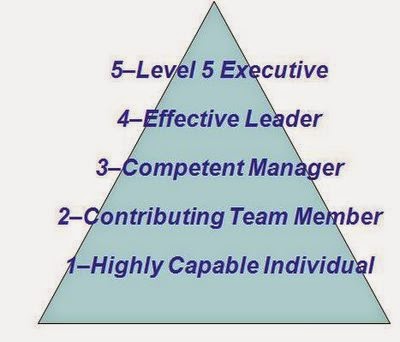
Back in June I posed a question about what kind of leadership we were really looking for in our organizations today.  For me this question reflected disillusionment between what management literature - and most of us being led - identify as the desired characteristics of our leaders and the all too common reality we experience that falls short of these expectations.  In other posts - primarily focused on political leaders - I have been able to highlight some of these failed leader scenarios.  If we all desire to be led by a Level 5 leader as identified by leadership guru Jim Collins then why does it seem so often that we fail to recruit or develop such leaders for our organizations?  How do we
continue to "allow" less than stellar and even destructive leaders to continue to rise to the top.

At the time of my June post I received relatively few answers.  I certainly got a lot of affirmation from the personal experience of others as they navigated their frustrating array of challenging leaders.  But "misery loves company" did not make for resolution.

It was only this past week that a glimmer of light came to me through a somewhat unexpected source.  As some of you might know I'm a voracious reader.  Not just for business-related material but rather a quite eclectic array of literature - Astronomy, Foreign Policy, Military History Quarterly, National Geographic, Triathlete, The Economist, science fiction, a lot of history of almost any nature, and biographies of historical figures.  Every once in a while I find a gem in these readings that I can relate to a current business or leadership challenge.   

The source of this insight is bound to lead some of you, or all of you, to wonder if I've gone off the deep end.  Or merely confirmed your suspicion of that truth all along.  So before going there I'm going to go back to Jim Collins for an answer.  For without perhaps saying it directly he touched on my dilemma as he described what a Level 5 Leader looked like.

My understanding of a Level 5 Leader is one who is unassuming and ambitious for their organization rather than for themselves.  This contrasts sharply with the character and behavior of leaders we may commonly find at the pinnacle of many organizations - those that present as charismatic and larger than life and are DEFINITELY ambitious, but for their own personal gain.  So should we - or more particularly me - be surprised that these are the leaders I encounter too often and am left uninspired by?  They are geared and driven to get to the top to achieve their personal ends whereas Level 5 Leaders - because they are more ambitious for the success of their organization - are more inclined to sublimate their personal achievements in deference to organizational goals.  In my assessment, they are far more inclined to be humble and self-sacrificing than their more ambitious counterparts and as a result are more likely to be overlooked for leadership roles.

So now here comes my highly controversial and perhaps overreaching insight from a very different source of information.  I recently completed a book authored by Sebastian Haffner in 1978 and translated from it's original German in 1979.  This analysis of a prominent historical figure of our time was entitled "The Meaning of Hitler".

Right off the mark you might now question how I could at all reasonably tie an assessment of Hitler's reign to that of anybody in a leadership role today.  What possible insight could I have gleaned from a book analyzing the actions of a genocidal megalomaniac?  Simply this.  Haffner analyzed both Hitler's successes and achievements and contrasted that against his failures and defeat.  What he concluded from both was that the rise and fall in Hitler's fortune was not as a result of any physical, mental, emotional, intellectual or other change in Hitler himself.  He suggests that Hitler was quite dogmatic and unwavering in pursuit of his ends and the means to achieve those ends.  Rather, Haffner states, "[The] key lies not in any changes in Hitler.  It lies in the change and alternation of the opponents with whom Hitler had to deal."  He goes on to say "Successes always involve two [people] - and the success of one is the failure of the other.  Given constant strength one can be successful against a weaker opponent and unsuccessful against a stronger one...Hitler's successes and failures become instantly explicable if one turns one's attention away from Hitler and towards his opponents at the times in question." (underline is my emphasis).

In short Hitler only succeeded as a leader when he faced weak opposition, when he faced weak leaders - Chamberlain, Daladier, and others within and outside of Germany - in the years leading up to World War II.  After the invasion and subjugation of Poland, and most definitively after 1941 and declarations of war on the Soviet Union and the United States, Hitler faced a decidedly different calibre of leaders in the form of Churchill, De Gaulle, Stalin and Roosevelt.  He ultimately was defeated even though his character and tactics had not changed at all from those that had led to his early, spectacular successes.

This may seem like a somewhat belabored point but the insight I gained from this unlikely source is that mediocre leaders, poor leaders or destructive leaders succeed not so much by what they do but by what we ourselves fail to do.  If we desire different leadership we must have the courage to look for it, to ask for it, demand it and support leaders that will inspire us to some more noble goals and achievements.

If the collective WE fails to exert our own expectations and standards for the type of leadership we desire than we likely deserve the hand we are dealt.  Misery may love company but it's no recipe for success.
______________________________


Greg Hadubiak, MHSA, FACHE, CEC, PCC
Executive Coach/Consultant
BreakPoint Solutions
gregh@breakpoint.solutions
780-250-2543

Helping leaders realize their strengths and enabling organizations to achieve their potential through the application of my leadership experience and coaching skills. I act as a point of leverage for my clients. I AM their Force Multiplier.

Monday, August 18, 2014

Building a Successful Team

Over my 25+ year career as a senior executive, consultant and coach, I've had extensive opportunity to be part of and lead many teams.  I've also had the privilege of assisting others build great teams or navigate the challenges of dysfunctional team environments.  I continue to have opportunities to diagnose and work with teams not performing at their optimal levels and continue to distill lessons from my own leadership experience to impart to them.  In doing so, I've particularly reflected back on what I still consider the best team that I have ever worked with which dates back almost 15 years.

When I first entered the picture as the new CEO of this particular organization it was experiencing more than a bit of stress - the organization itself was relatively new, it was experiencing the effects of significant budget cuts and service reductions, it had relatively poor standing with its public, the board itself was split along a number of different lines, and the past CEO - seemingly well-liked by the management team - had been let go.  Needless to say this wasn't an inviting environment and starting point upon which to commence my new leadership role.  By the end of my tenure though we had earned accolades and awards at a provincial level, had great relationships with our staff and unions, and performed at a level all out of proportion to our size.  We became the benchmark for other organizations like us - and many times our size.  What accounted for that success?  For me it had to be our level of teamwork, key elements of which I will describe below.

One of the first things I did was to take the management team back to ground zero.  Why were we here as an organization and what were we supposed to be focused on delivering?  We didn't have the luxury of building the mission, vision and values of the organization from scratch - the board had already done that to the perceived exclusion of the management team.  So I took them through each element of and, in some cases, each word of these statements and looked to develop better understanding for ourselves as to what worked in guiding our strategic and operational goals and activities.  This "reverse engineering" of our organization's mission, vision and values took time but it was time well spent.  At this point forward the management team owned these directions and goals.  We were all on the same page.

The team also created an environment in which all points of view were afforded an opportunity to be heard AND ACTED UPON.  I believe I led the way in this regard but all team members took probably what for them was significant risk in trusting that this new CEO meant what he said in seeking their input, information and guidance on a variety of initiatives.  I'm sure that for many "traditional" leaders looking in or experiencing some of my team meetings they would have described them as chaotic.  That might have been true, but I do like to think of it as organized chaos and that there was method to my madness.  I believe I was able to demonstrate that the answers to any question and challenge did not come from any one source no matter how authoritative.  The result was that we came to better solutions that everybody then bought into and supported.

Related to this organized chaos, was that this team had good, open communication which sometimes meant that our passions were freely expressed and differences of opinion were on the table.  We didn't agree for the sake of agreeing and we were prepared to challenge each other on a regular basis.  In our team, one was well advised to leave their ego at the door as it wouldn't long survive! We didn't suppress conflict or engage in conflict simply to be difficult.  We engaged in conflict precisely because we were passionate about our shared goals and were committed to being the best we could be as an organization in service of our clients and staff.  In this regard we also respected each other as professionals and for the experience we brought to the table.  We trusted each other.

We also set high expectations for ourselves, our team and each other. This equated to plenty of additional hours and taking on more than one set of duties to see something through.  This was true of all of us - including myself.  We undertook such effort not because it was demanded of us or mandated.  We did so because we were passionate about the work we were doing and we were committed to the team as a whole.  We didn't want to let each other down.  In a similar vein, we also took the time to support each other as needed.  Overall we were a very young team - on average I'm guessing that our management team's average age was 30 - but we did have some "veterans" on our team too.  Regardless, all of us seemed to recognize that we had opportunity to learn and develop and we gave freely of ourselves to others to strengthen them and our overall success.

Finally it is clear that while we worked excessively we did so because we truly enjoyed each others company.  We worked hard and played equally as hard.  Many of us have maintained contact and friendships throughout the intervening years.  I am exceedingly pleased when I do have the chance to meet again with some of my former team that they still describe our time together as the best experience of their career.  Sometimes it seems like that may have just been fortuitous but I also recount how challenged we were at the beginning of our time together.  I know that our success only came from a commitment to common goals, the courage and willingness to challenge each other and the status quo, and a passionate commitment to each other.

I believe a powerful team can be created with these "lessons" in mind.  It takes guidance from a leader to be sure but it also requires courage on the part of the leader to let the team develop its own path.  A strong and powerful team does not develop in the shadow of a leader but rather because a leader has the courage to let the light of the team and its members shine.
  _

Greg Hadubiak, MHSA, FACHE, CEC, PCC
Executive Coach/Consultant
BreakPoint Solutions
gregh@breakpoint.solutions
780-250-2543

Helping leaders realize their strengths and enabling organizations to achieve their potential through the application of my leadership experience and coaching skills. I act as a point of leverage for my clients. I AM their Force Multiplier.

Friday, August 8, 2014

Power...and the Aura of Power

Albertans woke up today to see the latest in what has become the ongoing saga of the demise of our former Premier - "Rules broken, money misspent...Aura of power...Premier used public assets (aircraft) for personal and partisan purposes...Other areas of government were wary of challenging decisions made in the premier's office...".  The latest issue is now being handed over to the RCMP to assess whether  criminal charges are warranted.  As was to be expected, the governing party is taking all steps it can to portray the issues as the actions of an individual while the opposition parties are doing all they can to paint this as simply the most visible sign of a culture of entitlement of a party too long in power and accustomed to doing as it pleases.

Politics is certainly a dirty game and I don't operate under any illusions about the altruistic motives of any of the parties involved in this current (or ongoing) scandal.  Opposition parties sense that their time to make hay is now but I've become highly skeptical and jaded as to whether any politician is better than the next.  Similarly we see political colleagues of the former Premier doing all they can to express outrage at the abuses of political office and public resources.  This kind of retrospective courage seems to me to at best insincere and delusional.  At worst it is self-serving.

I wish that this might be the end of the story but I'm not convinced of that.  Prior to this scenario playing out we had previously seen stories out of the public sector relating to dubious expense claims, large and questionable severance packages or golden parachutes, and other abuses of power.  I believe that there is more to come and more to be uncovered.  The full reality of what exists will not come easily especially in light of how previous leaders have already fared in the court of public opinion.

The reality of leaders who abuse their power - even at the risk of public exposure or worse - continues to exist primarily because some leaders do feel entitled, all powerful and above reproach.  In some cases they may even believe that they are doing nothing wrong, that anything that benefits them somehow benefits all, and even if there are abuses they will never be discovered.  They operate with immeasurable confidence in their own superiority and are not reluctant to use fear and intimidation as weapons to build, sustain and grow their personal position.

More troubling though is that WE allow and facilitate this type of leadership.  Our former Premier and other leaders who have been turned out of the public service for similar alleged transgressions did not accomplish all they did on their own.  And make no mistake, this kind of leadership behavior is not isolated to the public sector.  Leaders - both good and bad - work with and through others.  Salaries ultimately have to be approved by someone, airplane manifests processed by others, expense claims submitted and managed, and so on.  Many of us might try to find some solace or comfort to say that WE were intimidated by our leader, that we feared for our jobs or careers, or that "we were just following orders".  Some of us may have even developed a misplaced sense of loyalty and confused that what was good for the leader was similarly good for the organization.

Worse is that we may have been co-opted by a flawed or narcissistic leader.  For those serving a political master they may have seen their political future tied to the rising star of another.  Maybe they hoped to gain a new or more prominent cabinet posting.  Others see loyalty as key to their leadership aspirations down the road.  And sometimes they believe that it is best to protect their leader for the sake of their party's standing and reputation.  Parallels in our own organizations certainly exist.  Our job satisfaction, salary, bonuses, enhanced benefits, and other perks can be used to build a sense of commitment to a flawed path.  WE are a multimillion or multibillion dollar organization.  There is great pressure and responsibility that comes to me as a leader.  What's wrong with a few extra hundred, thousand - or hundreds of thousands - dollars coming my way?

This doesn't happen overnight.  Rather it very much mirrors the iconic story of a frog slowly being boiled to death.  Slowly but surely we compromise our values and high ideals because no one step or decision seems critical or egregious enough to cause us to stand up for what we say we believe in.  One day we just wake up and know that we are well past the line we vowed never to cross - or maybe we now find ourselves having to deal with uncomfortable stories on the front page of our local newspapers.  Whether as governing boards, as peers, or colleagues there are ample opportunities for us to exercise oversight, fulfill assigned duties, ask questions, or find the courage to say no.

WE often don't lack for proper policies, procedures, processes and protocols to hold ourselves to high ethical, professional and organizational standards.  More often WE lack the courage to use those tools and to hold to our values.  More often WE are not prepared to pay the price or endure the pain that comes from exercising that courage.

I recently finished reading a biography of Dietrich Bonhoeffer (author - Eric Metaxas).  It details the life of this German pastor, theologian, and author with a particular focus on his struggle against Hitler and Nazi Germany.  This is not a simple tale of right and wrong as it could easily have been turned into.  Bonhoeffer's struggles in finding his path are well documented by the author, and in the words of Bonhoeffer himself, as he determined what was right versus what was perceived as correct and loyal behavior for a German leading up to and through World War II.  He often fought with and was reviled by his peers.  He progressively lost his ability to practice as a pastor, to teach and to write.  Regardless he held true to his values and exercised choice in how he would live and lead.  His choice to not compromise his belief as to what was right for Germany and the Christian community ultimately resulted in his execution mere days before the end of World War II.

I'm not suggesting WE have to die for what we believe in.  What I am suggesting is that WE have far less at stake in holding ourselves and our leaders accountable than a Bonhoeffer, that WE have far more choice to do so than WE would like to believe, and WE have opportunity - and examples to guide us - in finding the courage to enforce a standard of leadership that WE deserve.

Be clear on your values, exercise your leadership, and make a difference because of it.
.

Greg Hadubiak, MHSA, FACHE, CEC, PCC
Executive Coach/Consultant
BreakPoint Solutions
gregh@breakpoint.solutions
780-250-2543

Helping leaders realize their strengths and enabling organizations to achieve their potential through the application of my leadership experience and coaching skills. I act as a point of leverage for my clients. I AM their Force Multiplier.

Thursday, July 24, 2014

Are you really listening?

Executive Coaches like myself often take pride on coming up with a great question that really touches on a crucial aspect of an issue that our client is presenting to us.  Moreover, we strive to engage in a coaching conversation, using questions as our tools, to get to the heart of the issue that the client is not presenting to us or even hiding from themselves.  What may be overlooked in this regard is that the ability to intently, actively and consciously listen to what our client is saying is critically important to knowing when to ask the right question.  Only by intense listening can we be of true service to our clients and help them discover, develop and own their personal action plan.

There are similar lessons for leadership in this coach-approach to interacting with and building your teams and in getting the best results for your organization.  In today's cacophonous and demanding environment leaders can easily lose the power of effective listening.  We are constantly being bombarded by "noise" from all angles and even in our off-time we seldom disconnect from our business - checking e-mails, answering calls, and just trying to catch up with our just "finished" work day while we get ready for the sprint tomorrow.  Sure, we might make the pretense of listening to the feedback and input of others but how often have we caught ourselves multitasking while one of our peers or subordinates is speaking to us?  How often do you catch yourself scanning your e-mail or sending a text message while on the phone?  What did you really take away from that conversation?

As leaders we are impatient for action.  We feel the need to be decisive.  We rarely take the time to pause, focus and reflect.  And that often means we have little or no time to listen for critical facts or observations coming to us from the skilled staff we have surrounded ourselves with.  We have lost the ability to discern what's important from the multitude of inputs coming at us.

Our own survival mechanisms also do us no favors.  Sometimes, in order to maintain the pace we have set for ourselves we subconsciously establish an array of filters that are intended to make us more "efficient" but actually compromise our ability to see the "forest for the trees".  So before we have had the chance to evaluate information coming our way our mind has already reacted instinctually, discounted the new data on the basis of the individual speaking (e.g. that staff member is too low on the totem pole to have relevant information), context (e.g., "they" don't know enough about our business to comment), or something as simple as timing confounds us (e.g., our minds are focused on another problem that seems more pressing at the time).

Organizations are similarly at risk of omissions in listening.  We engage in strategic planning exercises, employee engagement surveys, stakeholder focus groups, and opinion polls but sometimes structure the questions or processes to get the answers we want.  More astounding is that we sometimes lack the discipline to truly hear what our constituents are telling us even when it comes out in black and white.  We can easily hear what we want to hear and look for input that reinforces our existing biases.

So at an individual leadership level how can you overcome this bias against effective listening?  Here are some suggestions:
  • Disconnect from work/technology with a conscious intent.  Each of us needs some down time or reflective time.   We all need time to truly catch our breath, dedicated time to assess demands on our time, and clearly establish priorities in our business day.  It takes a huge amount of personal discipline to not just jump back on the treadmill at the crack of dawn every day.
  • Find your personal way to gain or conserve energy.  You will simply not be an effective listener if you are not rested and/or energized.  Each of us will have a different way of capturing this energy from getting one more hours of sleep, to sticking to a fitness schedule, to keeping up with a personal hobby or interest.  Give your body and mind a rest or a change of pace.
  • Step back and truly focus on the person in front of you.  Don't show up at a meeting or invite someone to talk to you without the conscious intent of actually listening.  Take at least five minutes to actually prepare yourself for your next meeting or conversation.  Put your last call, meeting, e-mail, whatever out of your mind before moving on to the next session.
  • Show up with a curious and humble mind.  Be prepared to ask questions.  You DON'T have all the answers.  If you did you'd be running the show all on your own.  If you are running an organization of any size there are far more things going on then you have eyes or ears to keep abreast of.  Respect the insight, experience and capacity of those you work with.
  • Don't interrupt.  Hold yourself back from having to have the answer.  Resist the temptation to formulate a response, rationalize a strategy, or otherwise be the expert.  Yes you are a leader and you may have come to expect that you should be decisive, but you should even more so consider yourself a facilitator with a mandate of pulling out every piece of information you can from all around you.  
Listening - effective listening - may seem like a lost art and perhaps it is.  But it's an essential leadership skill in this complex and ever changing world of ours that will likely require every ounce of discipline you have.  To listen is to lead and listening will set you apart as a leader.

  ______________________________

Greg Hadubiak, MHSA, FACHE, CEC, PCC
TEC Canada Chair/Executive Coach/Senior Consultant
hadubiak@wmc.ca

Helping leaders realize their strengths and enabling organizations to achieve their potential through the application of my leadership experience and coaching skills. I act as a point of leverage for my clients. I AM their Force Multiplier.


Thursday, July 17, 2014

One small step for man...many lessons in success

Time to get my geek on again.  For those of you who have read my blog for a while you'll have noted some references to Star Trek and Captain Picard.  Well those references only belie a much broader interest in astronomy and space exploration.  So it's with more than passing interest that I'm thinking about this coming Sunday, July 20, which marks the 45th anniversary of the first manned landing on the moon.  At the time I was only three and a half years old but yet I remember sitting in front of the TV with my parents, looking at the grainy pictures from a world away, and setting off a fascination with space that has lasted to this day.

Obviously this was a great achievement in human history.  What we may tend to forget, particularly as we get more distant from the event, was that this success was never assured nor was it achieved without great effort and sacrifice.  I believe that the success of the US space program in the 60's and 70's has a lot to teach us about achieving success in our business ventures today.

First, it is informative to remember that the genesis of the mission to land humans on the moon in many ways came out of a singular defeat suffered by the US in the late 50's - the successful launch by Communist Russia of a satellite (Sputnik) into Earth orbit in 1957.  This defeat - coupled with the fear of being outpaced by the rival Soviets - was compounded by other "firsts" of the Soviet space program, most notably getting the first man into space in 1961.  This "defeat" spurred on US efforts to get back in to the space race, redouble its efforts and ultimately establish a vision to inspire and guide their space program in the 1960's.  

“I believe that this nation should commit itself to achieving the goal,
before this decade is out, of landing a man on the moon
and returning him safely to the earth.”

President John F. Kennedy
What followed was a series of smaller steps before the ultimate success of Apollo 11.  From 1959 to 1963, six one-man flights of the Mercury program started the American manned space program.  This was followed by ten two-man flights of the Gemini program concluding in 1966.  The US took a series of small steps, increasing in complexity from the first Mercury flight through to the end of Gemini to set the stage for the Apollo missions.  Yet, despite all that had been learned over 16 previous efforts and years of work, the first Apollo mission ended in the tragic deaths of the entire Apollo 1 crew during a pre-launch test.  Lessons had been learned, the vision was compelling, smaller successes had been enjoyed, but trials and tribulations still had to be overcome.

Four manned Apollo mission preceded Apollo 11.  Again each of these missions kept moving the needle forward until such time as all was believed to be in order to attempt a landing - and departure - from the Moon.  Even at this late stage preparations were made for failure.  Then President Richard Nixon was provided with the text of a contingency speech, one that Nixon would read if tragedy struck and Neil Armstrong and Buzz Aldrin were left stranded on the lunar surface forever.

 Fate has ordained that the men who went to the moon to explore in peace will stay 
on the moon to rest in peace.  These brave men, Neil Armstrong and Edwin Aldrin, know that there is no hope for their recovery.  But they also know that there is hope for mankind 
in their sacrifice...

And there was a reasonable expectation of failure or at least no guarantee of success.  The risks were understood and at all levels of the effort - from the President down to the individual astronauts - there was a tolerance for that risk based on the compelling vision and the rewards expected for success.  
Ultimately, even with the singular success of Apollo 11 and a bit of complacency that comes with such a triumph, fate intervened to let us know that success is never assured or final.  In the case of manned space flight we were reminded of that relatively quickly with the near fatal accident of Apollo 13 and since with tragedies that have befallen the Space Shuttle program.

So what parallels in the success of Apollo 11 are to be seen in looking at what it takes to succeed in our more terrestrial ventures?  Here's what I believe we can learn from this 45th anniversary of Apollo 11:

  1. We can be motivated by defeats and even fear to set out on a path to success. 
  2. Don't underestimate the power of a compelling vision that stretches what you think is possible.
  3. Don't discount the small steps along the way that are necessary to achieve something truly great.  
  4. Reaching the pinnacle of achievement doesn't happen overnight nor without significant effort.  
  5. Plan for the best but prepare for the worst.  
  6. Success is never assured and it is more than likely that we will experience trials, challenges and adversity before we achieve our ultimate goal.  
  7. There is risk to be managed - and tolerated - in achieving something truly great.  Nothing risked, nothing gained.  
  8. Just as the Apollo program led to significant advancements in avionics, telecommunications, and computers, be open to other opportunities along your path.
  9. Never become complacent.  Just when we think we are on top of the world or have our plans and processes aced, something comes along to remind us of the need for humility, diligence and what it took to get to the top.
Look to the moon this weekend and be inspired by an achievement now 45 years old.  May you be so bold.
______________________________

Greg Hadubiak, MHSA, FACHE, CEC, PCC
TEC Canada Chair/Executive Coach/Senior Consultant
hadubiak@wmc.ca

Helping leaders realize their strengths and enabling organizations to achieve their potential through the application of my leadership experience and coaching skills. I act as a point of leverage for my clients. I AM their Force Multiplier.


Tuesday, July 15, 2014

The personal side of change management

I've done a lot of work in the area of change management.  This has been true on a one-on-one level as an executive coach, as a consultant working with a team or a business, and as a leader of various organizations over time.  I've been schooled on various models, best practices and pitfalls of change management.  In recent months, I've also found myself facilitating team sessions and running workshops around change management.  However, it wasn't until I read a blog post from another author that I gave much thought to the true personal impact of change despite the fact that I've worked through a pretty major change in my professional life in the past couple of years.

The blog post I recently read took a hypothetical look at the impact of change and crafted the story of an executive trying to explain to his young daughter why daddy was spending more time at home.  It was a nice work of fiction and covered off some of the questions that a child might ask of a father or mother in those circumstances - Why are you home so early?  What are you going to do now?  Does this mean that we won't go on vacation this year?  Will we still see our friends from work?

The post got me thinking about - and reflecting on - my own experience with the drastic change in career I took just over 2 years ago, what it meant to me at the time and since, and the power of that story to perhaps help others.  This latter point keeps coming home to me as I work with a variety of individuals and organizations as they initiate or react to change where we can overlook - quite consciously sometimes - the very real cost of change on a personal level.

In my case I saw the "writing on the wall" several months ahead of my eventual departure from my leadership role.  My organization undertook a long drawn out management restructuring that saw some leaders reappointed without competitive process while others were required to go through a selection process.  Early on I gave my direct reports the heads up that this was likely a convenient way to "reintroduce me to the marketplace".  Despite this foreshadowing on my part I continued to put forth best effort into my work and into the selection process as well.  However, coming to a reasoned assessment as to my ultimate fate did nothing to reduce my stress and anxiety during this time.  After all I had given a lot of my self into my organization in the preceding ten years and in many ways my role had become my identity. In actual fact, I had to deal with a string of sleepless nights leading up to my final interview with the assistance of a bottle of red wine.  As somebody who could be rightly called a teetotaler this was a helpful sleep aide.

I have to say that the actual "departure" event was relatively anti-climactic.  At some levels it was actually quite the relief to no longer live the charade of the past several months.  The surprise and shock was experienced more by my direct team than myself.  While I have not analyzed my "terminal event" through the lens of the Kubler-Ross model on death and dying, I probably did proceed through denial right off the bat if only manifested in a decision to take my family on a Disney cruise within a week of leaving my former executive role.  I'm still not sure how to truly assess that vacation time - was it an act of defiance, an act of reassurance for me, an act of reassurance for my family, or all of the above?

I've not had the same fictional experience of my daughters asking me why I might have been home more in the early days of my transition, or whether we were going to have a vacation or be able to buy them a new toy.  Rather it was me spending another string of sleepless nights trying to answer those types of questions for myself and trying to hold true to my own self-image as "man-of-the-house", professional and provider.  On and off over the past couple of years I've found myself having those same self-talks and striving with all my might to make sure that there is no impact to my family, their lifestyle and their goals.

I'll say that it's a lot to hold together and despite the best efforts of others - my wife in particular - it's a burden that I often still choose to shoulder alone.  I've not been able to completely answer all of my own questions over those past two years (e.g., where did some of my "friends" go?) but for the most part I've effectively dealt with the impact of organizational restructuring on my personal and professional life.  I remain anxious and carry the silent burden of trying to keep my family in the lifestyle they've become accustomed to.  I've remained committed to ensuring that my wife and daughters still get to experience all they can from life.  Overall, I believe I have held true to what's important to me as well as a leader and have translated that focus from a senior leadership role to one of business coach and consultant.

So what might be the power or lessons of this story for you in your leadership journey?  I hope there are at least two things that you might take away from this.  First, despite all the trials and tribulations we may be subjected to in our personal and professional lives, if we maintain our focus, effort and vision we can actually turn challenge into success.  So the sun does rise again.  Second, if you are initiating change, make effort to look beneath the project charters, timelines, and metrics to see the people being impacted by the change.  Recognize the extraordinary power you hold over their lives at that moment and into the future.  Recognize, appreciate and truly manage the personal side of change.
______________________________

Greg Hadubiak, MHSA, FACHE, CEC, PCC
TEC Canada Chair/Executive Coach/Senior Consultant
hadubiak@wmc.ca

Helping leaders realize their strengths and enabling organizations to achieve their potential through the application of my leadership experience and coaching skills. I act as a point of leverage for my clients. I AM their Force Multiplier.