Monday, March 3, 2014

Leadership - It's About YOUR Choice

Just over two weeks ago I marked the second anniversary of my departure from my last senior leadership role.  The experience of February 17, 2012, and the events leading up to this milestone event, were life changing in many respects.  Up to and after that date I had a great deal of time to reflect and contemplate the impact of that event on my career and my life.  At the time, I certainly would not have described this change as one of personal choice.  Looking back, however, it is clear that I had, in fact, certainly set the stage for this change in direction.  In reality, by a series of choices and a commitment to my leadership values and philosophy the die had been cast well before the arrival of my personal D-Day.

It has been my hope that my particular leadership values, philosophy and style have been evident in my blog entries over the past couple of years.  I have taken much from the writings of Dr. Deming, Jim Collins, Kouzes and Posner, Senge, Lencioni, and Covey to name but a few.  I have had the privilege to learn "in the field" from both good and bad leaders.  I have had the opportunity to apply all of this knowledge - sometimes to good effect and sometimes not.  At the end of the day, however, the power to choose how I lead and behave has always been available to me.

In recent weeks I've also had the time to reflect on a couple of different scenarios that reinforced for me the power of choice that we all have in terms of how we lead in our business roles and how we live our personal lives.  First, I reflect on the number of conversations I have had with my staff in general and some managers in particular.  In many of my leadership roles, I often led the development or re-commitment to our organization's mission, vision and values.  Even in smaller groups this could have been in the form of a team charter.  Regardless, it was intended to signal our overarching or mutual commitment to our organization and to each other.  In the process, I would emphasize the binding nature of what the team had created and our obligations to adhere to the standard that WE had set.  As a senior executive and or even CEO in these situations, this put me in the position of having to release people from their management duties when they didn't hold true to their obligations.  By the nature of my role, and my choice to be in that role, I became the final arbitrator of the team charter and values.

What do I recall from these scenarios?  First, I always tried to be clear with the team that we had all had a hand in setting our team vision, goals and values.  Therefore, once established we were all accountable to them.  Second, if we personally could not make or sustain those commitments we had a choice to make - stay in and recommit or move on to another role or organization that suited our personal temperament and objectives.  Finally, in the group setting, I also identified that as leader I might be placed in the position of having to "help someone choose" their new path.  Regrettably, over my 25+ year career in leadership I did have to help more than one person with that choice.  This last act was always a challenging conversation, never relished, but always necessary.

In making these tough personnel choices, I always considered it at least partially an organizational and personal failure.  How did "we" get to the stage where a split - regardless of how amicable it was - was the best option?  What role did the organization or my leadership play in making a situation beyond salvation?  Was the person hired into the wrong role?  Were the expectations for the role unclear?  Were mixed messages sent about what expected performance should look like?  Was there any performance feedback provided at all?  Was there sufficient investment in the individual leader to allow them to be successful or help them adjust to changing expectations?

There may also be times where your leadership style and values just don't fit into the organization.  Maybe they once did but something has changed.  The question becomes for you how important are those personal leadership values for you?  How much are you willing to compromise - if at all - to continue in your current organization?  Whatever answer there is to that question has to come from you and your own sense of self.  Hopefully you do that in the most conscious fashion possible.  The worst outcome may not necessarily be staying in or leaving a leadership role, but rather waking up in a circumstance without any real insight as to how you got there.
So I charge all of you in a leadership role to critically evaluate your leadership, to explicitly identify your core leadership values, and ultimately take a stand for your leadership beliefs when the time comes.  In today's often politically correct world my advice may seem somewhat nonsensical (and even career-limiting) but I would ask you to hold on to your ideals.  It seems to me that we need more idealistic - and perhaps fewer pragmatic - leaders than at any other time.   

I end this particular entry with a poem by Dylan Thomas that was referenced in a movie I watched last night (Dangerous Minds).  The context may be completely different, but it spoke to me about being true to self, holding true to one's ideals, all in an effort to make a real difference in this world of ours.  For me, it was also a call to leadership.  Choose to leader by your values and your terms.  There is a place and an organization calling for your leadership. 

Do not go gentle into that good night, Old age should burn and rave at close of day; Rage, rage against the dying of the light. 

Though wise men at their end know dark is right, Because their words had forked no lightning they Do not go gentle into that good night. 

Good men, the last wave by, crying how bright Their frail deeds might have danced in a green bay, Rage, rage against the dying of the light. 

Wild men who caught and sang the sun in flight, And learn, too late, they grieved it on its way, Do not go gentle into that good night. 

Grave men, near death, who see with blinding sight Blind eyes could blaze like meteors and be gay, Rage, rage against the dying of the light. 

And you, my father, there on the sad height, Curse, bless, me now with your fierce tears, I pray. Do not go gentle into that good night. Rage, rage against the dying of the light.

______________________________

Greg Hadubiak, MHSA, FACHE, CEC, PCC
TEC Canada Chair/Executive Coach/Senior Consultant
hadubiak@wmc.ca

Helping leaders realize their strengths and enabling organizations to achieve their potential through the application of my leadership experience and coaching skills. I act as a point of leverage for my clients. I AM their Force Multiplier.

Wednesday, February 26, 2014

Anti-Bullying Day - What does it mean for your Workplace and your Leadership?

Today is anti-bullying day and to honor that effort we have been tasked with wearing pink.  I did what I could fashion-wise in wearing a pink-like dress shirt.  More importantly as I reflected on the real meaning and effort behind the day I considered my own experience of bullying - both as a child and in the workforce.  I suspect in more ways than one bullying has in a perverse way helped me define my concepts of right and wrong.  In addition, I believe it has helped establish for me this somewhat quixotic predilection to champion the cause of the underdog and honorable causes. 

Many months ago I had penned a blog entry around bullying in the workplace.  Given today's date it seemed opportune to resurrect the entry and pose a question to you - what does today mean in the context of your workplace and for your leadership?

No doubt we are all aware of a multitude of tragic scenarios that have played out with increasing regularity in our local communities and across our respective nations - children and youth subjected to intense and sustained harassment that only gains attention or action after they have taken their own lives in a desperate attempt at escape.  Invariably as a community, as parents, as human beings we individually and collectively express shock and dismay that such a tragedy could take place.  Invariably we ask how and why could this happen, what should have been done to identify and stop the bullying, and what we should do now.  We seem particularly shocked that children could perpetrate such abuse. 

I'm not sure why we are so surprised.  Judging by my own experience and that of others an undercurrent of bullying exists within our broader society and in our workplaces.  Our youth are unfortunately just modeling our own "adult" and "professional" behaviors.

I want to first point out that by starting this entry in the way I have that I in no way intend to diminish the very real tragedies that have taken place.  I do, however, believe it is useful as a starting point in highlighting the fact that we unfortunately do not leave that reality behind once we move on from elementary school.  Inadvertently or not, our leadership styles and our work cultures also tolerate, sustain, and even foster bullying.  Just as there are not, and should not be, bystanders in dealing with bullying of our youth a similar sentiment must hold true in our organizations.

There may be more than a few questions rattling around your head at this point, not least of which may be "Does bullying really exist in my organization?"  and "What does bullying even look like?"  Or perhaps like me, and others who have reached out to me, you know all too well the face of bullying from your past or current work.  My personal experiences have run the gamut - leaders abusing their secretaries and subordinates, physicians intimidating their colleagues/nursing staff/ managers, union presidents running roughshod over their members, peers targeting peers, and on and on.  The list is endless.  Perhaps we have become a little bit less tolerant of such behavior and a bit more sophisticated in our response than when I first started my career but such behavior is still far too frequent for my liking.

What does this have to do with leadership?  Everything.  First, as leaders we have to be conscious of our own potential (or reality) for being the bully.  In our roles we yield great power and with great power comes great responsibility and accountability.  By the very nature of our roles we can intimidate and by using our positional authority - throwing our weight around - we can cow others into doing what we want them to do.  As leaders we can feel fully justified in doing so - we have been given the authority, we have earned the leadership role, we have been given a mandate, my staff don't/can't see the reality like I do, I have a professional designation (e.g., MBA, MD) that gives me even more credibility, and so on and so forth.  But is this roughshod approach real leadership?  It's not many subordinates who have the courage or temerity to hold fast in a point of view that is counter to what their boss is proposing.  Even less so if the track record for being contrary includes personal criticism, opinions being denigrated, being undermined on other projects or opportunities at a later date (i.e., payback), being overlooked for promotions or raises, or even being threatened with - or experiencing - job loss.  Even less so if the bullying behavior has proceeded with impunity before. 

If we are not the bullying leader we have a role in supporting and creating a culture that doesn't tolerate such behavior.  Leaving aside the moral obligation we have as leaders to prevent and eliminate bullying in the workplace, there are some very practical and self-serving reasons to deal with bullies.  The implications to individual and organizational performance are not to be underestimated.  Many authors and researchers approach this subject matter as a workplace health and safety issue.  As it should be.  And as with a variety of workplace health and safety issues the ripple effect of a bully's actions - especially if in a leadership role - equates to any or all of lower staff productivity and effectiveness, poor customer service, increased absenteeism, lower morale, poor team work, higher employee turnover, and very real (and costly) health issues. 

Morally and ethically we are also called to act as leaders and deal with bullying behavior.  Vested with our own positional and moral authority we are called to stand up for those who can't stand up for themselves and uphold the stated values of our organizations or professions.  I'm fairly confident that no organization on record nor any professional association has as one of its tenets a commitment to fostering a culture of bullying. 

All this being said we could still likely describe recent and ongoing examples of bullying in our organizations.  So what needs to happen to really make a change? As already noted, I'm not aware of any organization or professional association that promotes bullying or abuse or harassment in any form.  Quite the contrary.  So I don't believe that we need more written codes of conduct, regulations, policies, procedures or similar written statements on the matter.  What we need is more courage and action, not more paper.  We need to be leaders and carry through with the obligations we have signed on to.  We need to not dismiss bullying behavior as an aberration or one-time event.  We need to not condone such behavior because our boss, or peer, or subordinate or member of our staff "gets results".  And our response has to be far more than providing counseling to those experiencing workplace bullying, or shifting them to other duties, or giving them paid leave to recover.  Most of these types of actions really do nothing more than blame the victim - whether that is intended or not. 

Harken back to your days in elementary school.  Think about the kids being harassed and bullied today.  The options for response can seem limited.  Often a bully will threaten further - and harsher - retribution if the victim rats them out.  Amazingly enough the victim can experience more isolation from coming forward - they will appear weak and a whiner in the eyes of the rest of their peers.  If somehow the victim does find the courage to bring the issue to an authority figure there is no guarantee that the cycle of abuse will stop. 

From what I've seen in organizations, the behaviors we adopted in school to get through are the same ones that many use to get through similar situations at work - silence, tolerance, gritting of our teeth, turn the other cheek, just trying to make it through another day of work, hoping that we won't have to encounter that leader, that peer, that professional who seems to go out of their way to bully and intimidate.  If they do get the courage to stand up to the bully, the processes we use seem to further draw out the pain and the opportunity for further abuse and retribution.  The bully gets to continue their work, they may have more "behind closed doors" opportunities to threaten, they have polished responses that amount to "he said/she said", and they may even pull out their own claims to now being themselves abused/harassed by these allegations.  The victims often despair of having raised their voice.  Their experience seems to send them a message - don't speak up, lay low, the cost is too high.  And that message is brought home not only to them but to all staff.

As leaders we must be the ones to stand up to the bullies just as we may have once done in school - head on.  There must be zero tolerance for such unprofessional behaviors.  There must be the courage to take action on the code of conducts that we have all either helped create or signed on to.  Are such efforts easy or pleasant?  Decidedly not!  But that is what our role as leaders entails.  And I speak from experience - I have been threatened by and stood up to so-called leaders, to members of my own Board of Directors, and to abusive physicians.  In too many of those cases I often stood alone.  In many of those cases I too became a subject of abuse and harassment - late night calls at home, threats of legal action, public vilification, and in-your-face "discussions".  My role as leader called me to protect those who couldn't protect themselves, who often just wanted to come to work do a good job and to have the opportunity to enjoy that work. 

Leadership is hard work and it takes courage.  As a leader you set the tone by your every action (or inaction) each day.  Do you have the courage to stand up and call out the bully that is in your work unit, that is your professional colleague, that is your peer - that is your boss?  Or are you content to let someone else pay the price for your inaction?


______________________________

Greg Hadubiak, MHSA, FACHE, CEC, PCC
TEC Canada Chair/Executive Coach/Senior Consultant
hadubiak@wmc.ca

Helping leaders realize their strengths and enabling organizations to achieve their potential through the application of my leadership experience and coaching skills. I act as a point of leverage for my clients. I AM their Force Multiplier.

Monday, February 17, 2014

When a leader falls...

Earlier this month I took a hit between the eyes when I learned about the fall from grace of a (former) leader colleague of mine.  To say that I was saddened and taken aback would be more than a bit of an understatement.  I had developed a good working relationship with this individual even though we had really not worked in the same organization.  So perhaps my perspective was not as founded in "hard fact" as it should have been.  Maybe I became too enamored by a connection based on personality and shared life experiences. 

Unfortunately, in one way or another, this is not the first time that I have had some personal experience of a leadership fall from grace.  A variety of circumstances have surrounded the fall of my leaders or colleagues and the particular cause is not key to the reality and impact that such an event has - both for the individual and their teams.  As leaders we are often placed - or place ourselves - on a lofty pedestal.  In such a place our actions and behaviors are subject to a great deal of public scrutiny.  In our modern world we seem to see so many examples of this play out in politics, the business world and even in the not-for-profit sector.  Sometimes that scrutiny is warranted and sometimes it can be a bit over the top.  Regardless, in many respects we accept that reality for the material benefits it accords or because we are driven to achieve some higher purpose.

In more than a few cases the culminating event which precipitates the fall of a leader seemingly comes out of left field.  The event seems tragically out of character with other aspects of the leader's personality.  That's usually what makes the fall so much more difficult to comprehend.  As team members and colleagues we have placed faith and trust in our leader.  They have served as our beacon, our guide and our source of energy towards a shared goal and purpose.  Often it is because we have developed such an intense investment in the cause that our leader has espoused that the fall from grace results in such strong feelings of shock, dismay, and even betrayal.  Beyond the feelings we may now have about our fallen leader we also start to question the validity of the path we have been on.  We may even start to question our own judgment - how could we have been fooled, how could we have been so naïve, how could we have let ourselves be led down this path?  We start to question what this says about us as well as our leader.

So after the fall where to next?  For the leader and the team both there will be time for processing and reflection.  For the leader, rehabilitation (if that is not too harsh a term) is possible to achieve and there are real life examples of such in the public domain and in our personal experiences.  What's critical in moving positively forward, however, is sincerely accepting ownership for the circumstances leading to the fall.  The leader's response to their past or present actions will in fact determine their future.  I happen to believe that this can't be some staged public relations effort aimed at feigning remorse.  Rather, there must be tangible and heartfelt recognition of the line crossed and similar and sustained action to reestablish personal credibility within and beyond the organization.

For those who have followed, there needs to be some real effort as well to distinguish between the fall of the one and the cause that was espoused.  The latter may in fact still be worthy of our personal effort and investment even if our leader's actions may have compromised our ability to move towards the goal in the short-term.  There is also a fine line to walk at this time between disowning the actions of the leader and the leader themselves.  None of us is perfect.  Each of us have our personal weaknesses and may have made some of the same mistakes as our leaders given the right circumstances.  Beyond the fall, we each have to make our own personal decisions as to how we will move forward, what we will learn from any given situation, and ultimately find the courage and strength to continue making a difference in the world around us.

There is a constant need to remind ourselves of the standard of behavior now expected of us, how we set the tone for all around us, and how easy it can be to cross the line between "right"and "wrong".  With great power comes great responsibility.  The judgements for failed leadership can be both quick and harsh and can be informed by both reality and perception.  In fact, there may be times when we don't even recognize when we have "crossed the line" until the consequences are there for all to see.  Achieving a leadership position is often far easier than sustaining a position as a respected leader.  As leaders we have to be constantly assessing our environment and our own behaviors in that shifting context.  This is both the burden and honor of leadership.
______________________________

Greg Hadubiak, MHSA, FACHE, CEC, PCC
TEC Canada Chair/Executive Coach/Senior Consultant
hadubiak@wmc.ca

Helping leaders realize their strengths and enabling organizations to achieve their potential through the application of my leadership experience and coaching skills. I act as a point of leverage for my clients. I AM their Force Multiplier.

Wednesday, January 29, 2014

Can you be a Leader and a Friend?

In the Star Trek The Next Generation episode, titled "The Defector", Commander Data acts out a scene from "The Life of Henry V" on the holodeck of the Enterprise.  The notion is that by exploring the works of Shakespeare he will be better able to understand the human condition.  Data's director and mentor in this endeavor is Captain Picard.  The scene in particular focuses on the King passing himself off as a commoner to be amongst his troops on the eve of a great battle.  At the conclusion of this particular dress rehearsal, Data expresses confusion about the King's behavior - "Captain, why should a king wish to pass as a commoner? If he is the leader, should he not be leading?"  In that regard it seems to me that Data expresses a widely-held view amongst not just followers but also amongst those who lead - leaders must stand apart and perhaps even be aloof if they are to be effective.  Picard's response is even more compelling, however -  "Listen to what Shakespeare is telling you about the man, Data. A king who had a true feeling for his soldiers would wish to share their fears with them on the eve of battle."

From my very first job as a CEO in 1986 I can recall being chided for being overly familiar with my management team and my staff.  Many in my community, my Boards of Directors, and even members of my own management team would often express concern about my engaging manner and style.  They took issue with me playing golf with my staff, being part of the hospital slo-pitch team, being part of the hospital hockey team, inviting people over to my house and even the notion of idle chats in the hall or sit downs in the cafeteria.  In many if not most cases, we didn't discuss "business" but rather would discuss a whole range of other topics - new stories hitting the front pages, family events, and anything else that might come to mind.  Did that make us friends.  In some cases yes, in other cases no.  Regardless, this type of interaction certainly broke down barriers and reduced or eliminated preconceived notions about "Management" and "Staff".  I believe the relationships I developed allowed me to better understand the challenges my staff and my organizations faced.  I even ultimately developed some great relationships with previously intractable foes.  This effort certainly generated greater trust and credibility in me from those that I led.  Ultimately, it allowed all of us to be more on the same page moving forward particularly when times were tough.


Amazingly enough, even though nearly 30 years have passed since my first leadership role (Yikes!) I still hear about and see the same adverse reaction to leaders having anything more than "business-focused" engagements with their staff.  Often times this means executive isolation in the C-suite or a strict adherence to rules and regulations so as to not have the appearance of favoritism.   But as Picard's quote reveals, there is a great deal that a leader can gain from being amongst and with his staff.  Moreover, what the quote also starts to touch on is the critical role that trust between leader and followers plays in being successful in a leadership role.  If you can inspire trust as a leader you are in fact going to get better results, increased morale, enhanced creativity, loyalty and retention.  In contrast if you can't foster trust - or in fact engender mistrust amongst your staff - you can be assured of a range of negative results. 

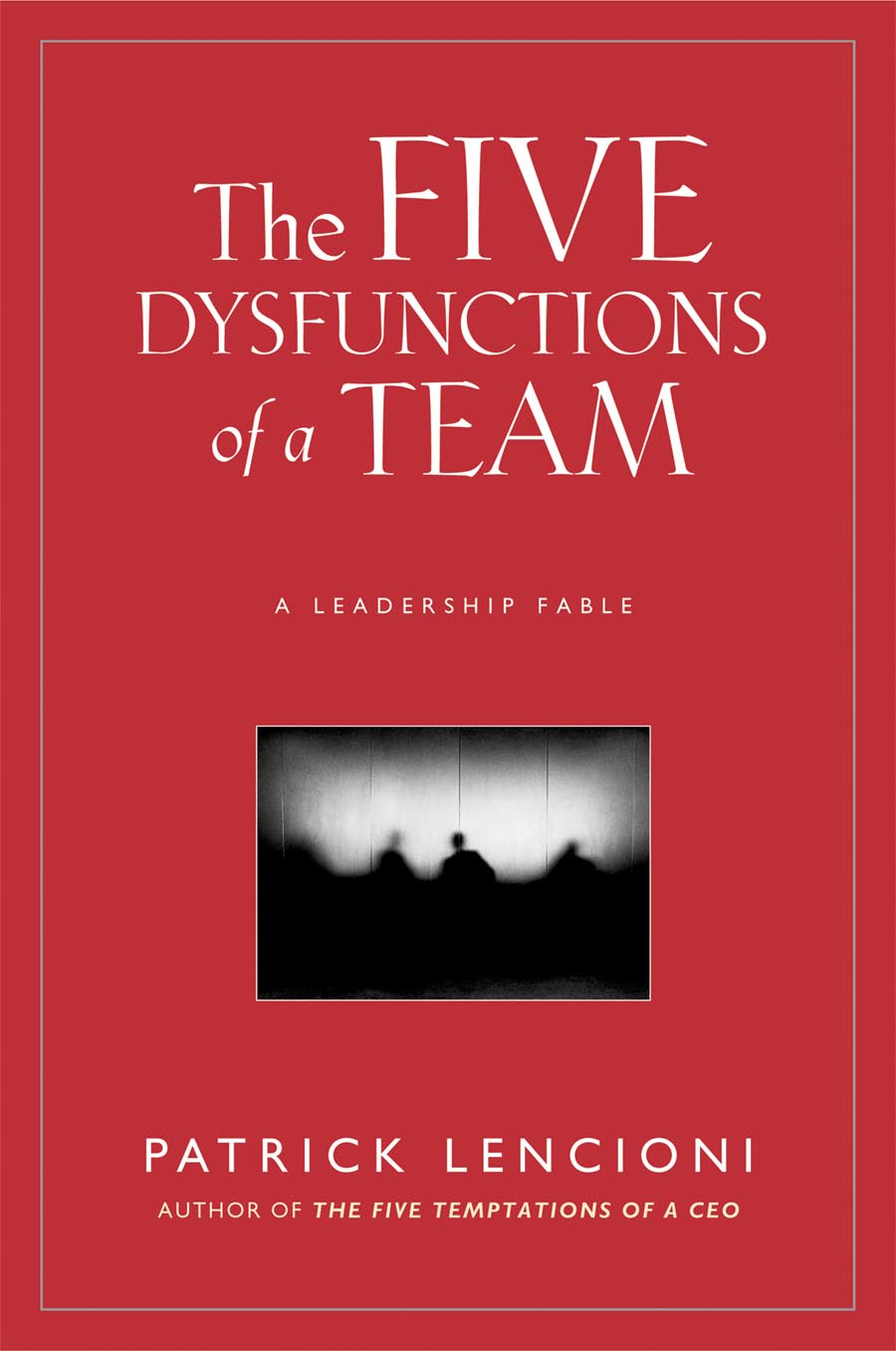
In case you see the above commentary as the rantings of Star-Trek enamored geek let me first refer you to the 2002 work of Patrick Lencioni, "The Five Dysfunctions of a Team".  In this work and in subsequent writings, Lencioni described and expanded upon what holds a team back from achieving high performance.  The critical linchpin that Lencioni identified - which was the core and base of poor performance and team dysfunction - was the Absence of Trust.  This manifested as an unwillingness of team members to be vulnerable and authentic in their group, unable to genuinely share with their colleagues, and lacking the opportunity and safe environment in which to admit mistakes and weaknesses.  Without a strong basis of trust, teams could hope to engage in constructive conflict, achieve shared commitment to goals, hold themselves and team members accountable for performance, and never achieve the results that they desired.  In all respects developing this trust comes from the tone set by the leader.

This concept of trust, however, is not new or a recent invention.  Starting in 1983, Kouzes and Posner began a research project in leadership that would ultimately lead them to write several acclaimed books ("The Leadership Challenge", "Credibility") and identifying the five leadership practices of successful leaders.  At the heart of their research and conclusions was that a leader must know their followers and speak their language.  People must believe that you understand their needs and have their interests at heart.  Only through an intimate knowledge of their dreams, their hopes, their aspirations, their visions, their values is the leader able to enlist their support.  I don't know about you, but it seems to be a well nigh impossible task to achieve that kind of understanding of your staff and followers if you don't spend significant time with them, earning their trust, building your credibility, and perhaps even becoming a friend to more than one or two of them. 

Let me put at least one qualifier out there on this leader and friend concept.  You are the leader - whether as supervisor, manager, director, vice-president or CEO.  This means you have duties and obligations that may put your friendships in jeopardy at certain points in time.  You are obligated to make the tough choices as required.  Ultimately, you can't put your friendships ahead of your moral, legal and ethical obligations.  Everybody needs to understand the parameters under which you ultimately have to function as a leader.  Just as in other parts of your world, some of your friends will be more understanding of the realities that you face than others.  Hopefully, however, based on the foundation of trust and credibility you have established by being present, available and truly engaged with your staff you may get cut a bit more slack than if you were the aloof, distant and omnipotent leader that some see as the pinnacle of success.

So, yes being a Leader and a Friend is possible and from my perspective and experience quite logical (as Commander Data and Commander Spock might both say).  Build your trust and credibility by being amongst your followers, understand their challenges and let them understand yours.  The results might surprise you. 

A footnote:  I have a confession to make.  I've taken this concept of friendship at least one step further in my career.  I met my wife through my work.  Being that I was a member of the senior leadership team in my organization and she was a front-line supervisor in the same organization you can imagine the gnashing of teeth and the pulling of hair that ensued.  Both of us thought long and hard about exploring a relationship and I went so far as to consult with Human Resources and my Ethics resource.  The relationship did in fact proceed and turned into the love of my life.  More to the point of this entry there were many issues to navigate in respect of ensuring clear separation of decision-making and considerations of "friendship".  However, I will say with strong conviction, that my leadership benefited enormously by the perspective that my supervisor-wife brought to me.  She was able to clearly tell me when our stated organizational values failed to translate to the frontlines.  She was able to clearly tell me when senior leadership was on the mark or out-of-touch with reality.  We clearly had a mutual trust and friendship that I leaned on while we worked together and she helped me be a better leader.  
______________________________

Greg Hadubiak, MHSA, FACHE, CEC, PCC
TEC Canada Chair/Executive Coach/Senior Consultant
hadubiak@wmc.ca

Helping leaders realize their strengths and enabling organizations to achieve their potential through the application of my leadership experience and coaching skills. I act as a point of leverage for my clients. I AM their Force Multiplier.

Thursday, January 23, 2014

Can you lead from behind? Or the side?

One of the privileges I've had over the years, both as a senior leader and as an executive coach/consultant, is that I've had the opportunity to get to work with some truly amazing leaders and aspiring leaders.  Many of them are possessed of similar qualities and characteristics - drive, energy, passion, idealism, and a strong desire to make a difference.  Given the opportunity and the leeway, they grow, develop and achieve some amazing results. 

As one might expect or imagine they also often share some of the same frustrations.  One issue that comes up quite frequently is the challenge they face in their organizations in not being allowed to make full use of their skills, abilities and energy.  They are often being held back by the "leaders" above them.  As a consequence their organization does not get the full advantage of their energy, enthusiasm, and willingness to take on more responsibility. 

From my vantage point there's real risk to the organizations as a result of this style or culture of leadership.  In some cases, these highly motivated and capable individuals become so frustrated by their current reality that they actively seek opportunities elsewhere.  So rather than consciously building and supporting a succession planning pipeline these organizations are often unconsciously encouraging voluntary departures of these highly motivated and capable individuals.  A huge loss of potential and a huge cost to have to subsequently hire external candidates to fill leadership gaps into the future.

So can you let your followers or aspiring leaders succeed?  And what kind of environment do you have to create to keep them engaged in the short-term and for the long haul?  In many cases the answer to these questions comes down to doing the opposite of what you might be doing right now.  From my discussions with these stars in the making there are various leadership behaviours that inadvertently - or deliberately - suppress the drive and energy right out of their future leaders or that drive these leaders right out of their organizations.

First off, if you are truly self-centered leader than there is not much beyond this that you are really going to pay attention to.  If it is really all about you then I expect that affording the opportunity for others to grow, develop and demonstrate their skills is already being seen through a lens of how will this benefit your own standing.  Not much advice I can provide you with because we are just working off of a different playbook.  As for those reporting to you, the best advice for them might be to persevere, learn what they can, and seek out more fulfilling opportunities as they arise.

For those of you who have a more altruistic bent, let your next generation of leaders exercise their skills, abilities and competencies.  This may seem a particular challenge to a current leader when your followers have skills and abilities that you don't.  We've likely all had this experience.  We may have risen to our current leadership role more by experience and learning the ropes than through formal training and preparation.  And this experience and on-the-job learning took place in a very different set of business circumstances than we are now dealing with.  We may not have been afforded or taken the opportunity to learn new skills or otherwise upgrade.  Now we are finding that those who have been hired after us may in fact have some greater capacity or capabilities than we have.  We can choose to be threatened by this reality or take on a true leadership role by fostering and utilizing these skills to the benefit of the organization.

Provide your budding leaders with clear expectations and objectives.  Its a tough environment to work in when you truly don't know what the specific targets are, what authority you have to make decisions, or what limits there may be to one's sphere of influence.  This becomes a recipe for frustration.  Give your budding leaders the clear parameters in which they can exercise their authority and allow room for their drive and energy to make a difference.  There is probably nothing more frustrating than to have the rules of engagement constantly shift on you. 

Similar to the point about clear expectations above, resist the temptation to micro-manage the efforts of your aspiring leaders.  If you have set clear goals and established some no-go zones, allow your people to achieve the goals set in a fashion best-suited to their leadership style.  It's more than likely that they won't do it exactly as you would have done it.  Sometimes they may even be more efficient and effective than you would have dreamed.  Perhaps they are going to come up with an innovative and inspired effort that you and others can learn from.  Perhaps they will make a mistake along the way too.  Use those as opportunities for learning and growth rather than as an excuse to jump in, take over or otherwise curtail their development.

Finally, stay consistent in your approach.  If you have given your next level of leaders a set of expectations, been clear about goals and objectives, set some targets make sure that at the first sign of adversity that you aren't pulling out the rug from under them.  Don't be a wimpy leader.  Not only will this prove to be a frustrating leadership development exercise for your follower, you are likely to do more than a bit of damage to your own leadership credibility.  Be consistent.  Stay the course. 

Ironically enough, by learning to lead from behind or the side you are likely to enhance your reputation as a leader in your own right, get better results for your portfolio or organization, and create greater human resource capacity in your business in both the short-term and the long haul.  It may take greater strength on your part to support your developing leaders than just jumping in and taking over but I believe you'll find the benefits worth the effort.
______________________________

Greg Hadubiak, MHSA, FACHE, CEC, PCC
TEC Canada Chair/Executive Coach/Senior Consultant
hadubiak@wmc.ca

Helping leaders realize their strengths and enabling organizations to achieve their potential through the application of my leadership experience and coaching skills. I act as a point of leverage for my clients. I AM their Force Multiplier.


Tuesday, January 14, 2014

Compassionate Leadership


On December 5, 2013, the world lost one its truly great leaders - Nelson Mandela.  One of the most striking aspects of his life and his passing were the accolades that echoed from around the world and from a variety of political circles.  Nelson Mandela's leadership and legacy transcended cultures, extended well beyond his country and Africa, and likely will continue to serve as inspiration for many for years if not generations to come.  This was certainly not always the case.  Mandela was a controversial figure for much of his life.  At points in time he was denounced as a communist and a terrorist.  Ultimately, however, he stayed true to a course and his cause and gained international acclaim for his activism and leadership, having received more than 250 honours, including the 1993 Nobel Peace Prize. 

There are certainly those far better positioned than I to expound upon the particular leadership style and qualities of Mandela. However, one quality that stands out for me is the compassion he demonstrated for those that persecuted and imprisoned him.  Aside from a life spent as a second-class citizen in his own land, Mandela also endured 27 years of imprisonment and more than a few of those years virtually cut off from his family and the world.  Mandela could easily have become embittered and vengeful during this time.  He could also just as easily given in to desires expressed by many of his followers for justice for all past wrongs.  He certainly could have fallen into the same pattern as other resistance leaders upon assuming power and exacted swift and bloody justice on his former foes.  The fact that he did not is testament to his personal integrity, his commitment to a strongly held set of personal values, and a compassion for his jailers and countrymen.  And not only did he not simply restrain himself in this regard, he in fact became friends with and came to be revered by many of his former adversaries.

This compassionate style of leadership is not something that we are typically used to or comfortable with in our business environments either.  By way of example, I was just reading an article that described how Bill and Hilary Clinton kept track of "betrayals" in their many years of political life and how that list was used to evaluate actions on go-forward basis.  I don't believe this is in any way an isolated set of circumstances and we could easily identify similar situations with other political parties, countries and organizations.  "Might makes right" or "An eye for an eye" seem to be phrases - and realities - that continue to hold currency for many of us.  Too often it seems that we have to be in the right rather than working to make sure that the right things get done.  Too often we still believe that demonstrating compassion and forgiveness is too much of a leadership risk that will result in others exploiting our weakness.  Too often we react rather than lead.

Without doubt demonstrating and acting with compassion requires courage.  It takes courage to be vulnerable, to take a risk, to not exact retribution for real or perceived slights.  Let's be clear though, being compassionate doesn't mean that you have to have sympathy for another's position nor do you necessarily have to be a kind person.  Mandela certainly would not have sympathized with the position of his jailers nor would he have shirked from the kinds of change that South Africa had to go through in dismantling apartheid in order to be kind to his recent foes.  Sometimes hard things need to be done and said.  You have to sometimes be cruel to be kind.  And ultimately, change is and was necessary and good for all.

So what does it mean to be compassionate in your leadership role?  As Mandela's experience demonstrates, first and foremost you have to be aware of a committed to your own sense of self and your own sense of right and wrong.  You have to understand and be able to clearly articulate and stay true to a grand vision.  You have to be prepared to change and discard old notions, paradigms, and rules in order to achieve the greater good - particularly if you want to speak to more than one narrow constituency.  You have to be present with and aware of the thoughts, aspirations, concerns and challenges of those around you.  In order to do that as a leader you have to be prepared at all times to engage with those you lead - or could lead.  You have to be prepared to think with both your head and your heart, to be open to the thoughts and emotions of others in good and challenging times, and be willing to be open and honest with your own thoughts and feelings - to demonstrate your willingness to be courageously vulnerable.

Finally it's not enough to be compassionate in words.  As a leader you must ACT with compassion.  You will be evaluated by the courage of your convictions.  You may not win a Nobel Peace Prize, nor struggle for nearly three decades in a seemingly hopeless cause, but perhaps you still will leave your legacy as a compassionate leader that inspired others.
______________________________

Greg Hadubiak, MHSA, FACHE, CEC, PCC
TEC Canada Chair/Executive Coach/Senior Consultant
hadubiak@wmc.ca

Helping leaders realize their strengths and enabling organizations to achieve their potential through the application of my leadership experience and coaching skills. I act as a point of leverage for my clients. I AM their Force Multiplier.

Thursday, January 9, 2014

Is A Narcissistic CEO Good For Your Organization?


Cheating a bit here with this blog, but the article noted below was too good not to pass on.  Moreover, I happened to read the article this morning after just having a conversation with a colleague of mine about disappointing leadership behaviors we have recently experienced.  Coincidentally, one of the breaking news stories today adds some further context with Governor Christie of New Jersey making apologies - and staff changes - for some political shenanigans south of the border.  But that's just one example of personal ambition getting the best of a leader.  We all have examples to share and commiserate over in our own business and political environments. 

I've addressed this issue in previous blog posts but not with quite the same focus and vigor as the article penned by Bret Simmons:

http://itsaboutleadership.blogspot.ca/2012/07/health-care-from-good-to-great.html

http://itsaboutleadership.blogspot.ca/2013/09/charisma-and-leadership.html

In the article you will see reference to a particular industry but I'm confident the conclusions will resonate in other sectors as well.  At another level the article also seems to speak to the short-term attention span of our society as a whole - we want results now without due consideration of long-term consequences.  This is true in our business environments where monthly or quarterly results often drive decisions or in our political offices where direction can shift with the latest public poll or perception of impact on reelection chances.

Enjoy the article and look forward to hearing your thoughts.

http://ldrlb.co/2010/09/is-a-narcissistic-ceo-good-for-your-organization/

______________________________

Greg Hadubiak, MHSA, FACHE, CEC, PCC
TEC Canada Chair/Executive Coach/Senior Consultant
hadubiak@wmc.ca

Helping leaders realize their strengths and enabling organizations to achieve their potential through the application of my leadership experience and coaching skills. I act as a point of leverage for my clients. I AM their Force Multiplier.

Monday, January 6, 2014

Achieving your Leadership Goals in 2014


In my last blog before the end of 2013 I identified the challenge that most of us face in achieving our New Years resolutions.  One comment that came back to me almost immediately was "Well, what does it take to be successful then!?"  I identified at least one success factor at the time, that being an external, unbiased and objective support in the form of a coach, mentor or similar sounding board.  I will reinforce that perspective again but put it within the context of a broader set of tools and techniques that can help you be the better leader you want to be.

Fundamentally, I believe that to be successful you need to treat your leadership development plan or resolutions no different than you would any major project or change management initiative.  Any successful organizational initiative adheres to a certain core set of steps to move from vision to successful conclusion.  Success in reaching your leadership development goals can be achieved from taking a page or two from this experience.

First, how have you arrived at your particular conclusions that the leadership goals that you have set for yourself in the coming year are in fact the correct or best ones?  What process or assessment have you utilized to evaluate your leadership success and opportunities for growth on a go-forward basis?  How objective and comprehensive has this evaluation been?  As with any large-scale organizational initiative, it is to be hoped and expected that the plans for the coming year have been based on some concrete evidence that the efforts planned are the best use of your available resources.  Just as with an organization-wide effort, your time and money are limited resources and you want to leverage them to best effect. 

Second, how compelling are your leadership development goals?  How compelling is your vision for change?  Without having a compelling vision for your personal development, for how you want to be different as a leader, you are unlikely to make the kind of commitment it will take to succeed.  This of course presumes that your goals are a bit more ambitious than merely getting into work 30 minutes earlier than past practice.  If you are setting ambitious or stretch goals for yourself what are you prepared to sacrifice to be successful?  What kind of personal change are prepared to endure to take your leadership to the next level?  If your leadership vision is not compelling enough you are likely to falter upon hitting that first significant barrier.

Next you need to document your plan of attack, break down your goals into smaller objectives, set milestones, and start working the plan.  You have to move from evaluation and vision to action.  Like any good strategic or project plan, you have to move your personal leadership plan out of your head and off the shelf to be of any true value.  It's at this point that you move from the grand vision to SMART statements - Specific, Measurable, Achievable, Realistic and Time-limited.  This can be a challenging piece of personal work and perhaps more so in the realm of leadership behaviors and skills.  This is why I also caution leaders not to get caught up in trying to create the perfect plan before they take action.  This is tantamount to paralysis by analysis.  Your plan should continue to evolve and be flexible enough to respond to changing circumstances while keeping your grand vision in mind.

In this plan key milestones, short-term objectives and evaluation measures must also be identified and adhered to.  It is for this reason that a well-developed written plan as identified above should be created AND POSTED IN YOUR LINE OF SIGHT to review on a regular basis.  Again, like any organizational plan, what gets measured/evaluated gets managed.  You need to provide yourself with dedicated time on a periodic basis to check in with your plan.  What goals or objectives need to be adjusted based on circumstances?  What additional effort or compensating strategies do you need to put in place to continue on track with hitting your targets?  Without setting aside dedicated time to do this you will find yourself off track - and demoralized - in no time.

Put in place the necessary supports to ensure your success.  Too often individuals (and organizations) fail to leverage all the potential resources they have at their disposal to ensure the success of their development effort.  We often - and mistakenly - assume that achieving our personal goals is merely or solely an act of will.  Conversely, we then often identify failure in achieving our goals as a reflection on our personal strength or character.  In reality, what we have failed to do is to take all the necessary steps to ensure success.  As noted above, one of they key supports you can put in place for yourself is a written plan.  The very act of committing your goals and strategies to paper increases your chances of success.  Sharing your plan with others - publicly declaring your intentions - further cements your commitments to yourself and may enlist others in supporting your efforts.

At any and all points in this process you may choose to get the support of a confidential, objective resource like an executive coach, peer advisory group or similar individuals or entities.  Such a resource can help you objectively evaluate your leadership development opportunities, support development of a robust plan, and help hold you accountable to your plan. 

Finally, make sure you build in the ability and opportunity to celebrate your achievements along the way.  This is where establishing a series of incremental steps towards your ultimate goal becomes an essential element of your leadership development plan.  You can't eat the elephant whole!  Make sure that you can experience success one small step at a time.  Otherwise you can be daunted by the enormity of the task you have set for yourself or be discouraged if you are unable to see tangible results for the efforts or sacrifices you are making.  Don't be shy about rewarding yourself in some tangible way.

Treat the achievement of your leadership goals as you would any other large scale project.  Give it the same care and attention.  You are worthy of the effort and you will benefit yourself and those you work with as a result. 

______________________________

Greg Hadubiak, MHSA, FACHE, CEC, PCC
TEC Canada Chair/Executive Coach/Senior Consultant
hadubiak@wmc.ca

Helping leaders realize their strengths and enabling organizations to achieve their potential through the application of my leadership experience and coaching skills. I act as a point of leverage for my clients. I AM their Force Multiplier.

Tuesday, December 31, 2013

Resolve to Invest in Your Leadership

It's that time of year again when many of us make New Year's resolutions.  The turning of the page at the stroke of midnight on December 31st provides a point at which many of us believe or aspire to a new level of performance at a personal or professional level or both.  Unfortunately, the rate at which these resolutions are kept and the extent of actual achievement falls far short of the inspired vision that created them.  In fact, some studies have identified that of those people who have made resolutions less than 10% will actually see them through in the course of the coming year. 

In the context of your leadership what have you resolved to do differently (and presumably better) in the coming year?  If you are an individual and a leader possessed of any degree of personal humility you would recognize that there is always opportunity for improvement.  Think back in the past year to those moments in which your leadership was challenged, where you struggled or were frustrated with getting results or getting results in a timely fashion, and even in those circumstances where you spent more than a few sleepless nights challenged by a key decision with seemingly no right answer.  With the benefit of hindsight what would you have done differently?  What skills or experience are going to better equip you for the challenges to come in 2014?  What are you going to do differently to better prepare yourself?  What are you prepared to invest in becoming a better leader?

As a TEC Canada Chair and an Executive Coach, I've engaged with many leaders, both formally and informally in the past year.  It's been interesting to note that, despite the diversity of industries and differences in years of experience of these leaders, the issues they face are often are quite similar.  Moreover, as leaders they also consistently struggle with the fact that they don't have a confidential resource at their disposal to bounce ideas off of, to express their own doubts about a plan of attack, or to simply have a forum to "talk-out-loud" without fear of being judged.  Most recognize the value of such a confidential resource or forum but not all avail themselves of the opportunity to engage such expertise.  Why?  There are a range of reasons that do come up but two of the most common are Time and Money. 

Considering those objections to engaging a confidential external resource it seems to me these leaders are undervaluing an investment in themselves and their leadership.  Given the fact these leaders are making decisions sometimes valued in the millions of dollars, impacting on hundreds or more staff, and countless more clients or customers, it seems to me that an investment in ongoing leadership development and support would make for a quite positive ROI calculation.  So while I can assume that a majority of leaders have implicitly or explicitly made some "resolutions" about how 2014 will be better than 2013 they may not be giving themselves all the ammunition they need to succeed.  And maybe they get lucky and are part of the 10% that make it despite all barriers, obstacles and challenges.  However, I'd like to think that for a few dollars and few hours of support each month those odds of success turn decisively in your favor.

Resolutions can provide you with a great personal vision.  Turning those resolutions into reality and success benefits from you - The Leader - making a commitment to truly investing in yourself.  Engaging with an objective and unbiased sounding board that will help you assess the past, build on your strengths, set clear and specific goals, and help you stay accountable to your plans - this is what makes a resolution and your leadership development a reality. 

As a leader, you one of the greatest assets your organization has.  Your Time and Your Money (and that of your organization) are precious commodities.  Invest this time and money wisely and to good effect.  In the context of your responsibilities you owe it to yourself and your organization to continuously sharpen your leadership acumen.  It's about you and it's about your leadership.

Resolve to invest in your leadership in 2014.
______________________________

Greg Hadubiak, MHSA, FACHE, CEC, PCC
TEC Canada Chair/Executive Coach/Senior Consultant
hadubiak@wmc.ca

Helping leaders realize their strengths and enabling organizations to achieve their potential through the application of my leadership experience and coaching skills. I act as a point of leverage for my clients. I AM their Force Multiplier.

Thursday, December 19, 2013

It's The Thought that Counts - Redux

I just recently read an article that suggested that the annual Christmas party was the one last best opportunity in the year to boost or salvage one's employee engagement scores.  At one level I couldn't help but chuckle at this perspective - as if one kick-ass party was going to somehow undo an entire year of not paying attention to a company's most valuable and portable resource.  To me it's somewhat akin to saying that I could be a horrible husband or parent all year long and somehow overcome that with a great anniversary or birthday present.

On the other hand, I could also appreciate and buy-in to the perspective of making sure that as a leader we truly show up in an authentic and sincere fashion at this time of year.  That we take this time to truly demonstrate our appreciation for our staff, our team, our co-workers and our fellow human beings.  And perhaps that from this spirit of giving we could hold ourselves in that spirit for the year to come. 

Last year, I wrote an entry focused on how we as leaders do or do not show up at this time of year, and whether we demonstrate with any authenticity our appreciation and commitment to our staff.  With some minor edits I have reprised that entry for your consideration.

So Yes, the Christmas season is upon us once again!  If you are like me that usually means the typical scramble to get those last minute gifts, prepare for family visits, or send off Christmas cards.  It is also the time of year for work-based Christmas parties and events.    In my experience these have taken on many forms from unit-based social events, to Board/senior executive formal functions, to larger team-based gatherings at a local restaurant, and even holiday-themed meals provided for free to all staff during the Christmas season.  What some may fail to realize is that these events say a lot about the organization's or the individual leader's commitment to staff and can send strong messages about the reality of employee engagement in the organization. 

I recall from painful experience a year in which budget and optics caused my organization to cancel what had been a long-standing event - the annual tradition of offering a free meal to staff in the week leading up to Christmas.  Given the nature of trying to serve hundreds of people at 3 or 4 points in the day the food provided was delivered in buffet, industrial style production - hot food dished out cafeteria-style, with cake or squares for dessert, and your choice of juice or coffee.  There certainly was cost, but not extravagance.  Staff social committees put forward their best effort to provide entertainment for these functions as well so there was music, caroling, and contests to encourage socialization and camaraderie.  What I believe staff also enjoyed was the fact that very many of their managers took turns serving out meals at the event.  This included senior executives as well.  A colleague of mine and I made a particular tradition of taking on the night shift - which if memory served was 1 or 2 in the morning.  Staff were generally impressed that we made the effort to come in at night to put in a couple of hours of work and engage in conversation with them.  And we both thoroughly enjoyed it. 

Modest cost but an investment that paid off many times over in connecting with staff.

Needless to say the cancellation was not well received by most.  It was a challenging decision to make.  Some believed that public perception as much as cost supported the decision to cancel.  If there were budget challenges for the organization how could we justify spending dollars on a staff Christmas meal?  Others believed that if competitors were making similar decisions we had no choice but to follow.  However, for most management and staff it was not a warmly received decision.  Many felt it diminished the hard work and sacrifices of all staff.  Many felt that this was the one true reward and recognition that they received in a year and now it was gone.  Others may have taken the tradition for granted and it simply became an entitlement.  Nevertheless the cost to the organization in terms of goodwill was not insignificant.  We definitely came across as Scrooge-like.

What also went by the way that year was any formal lunch time gathering of management teams.  All of my managers would have gotten together at a restaurant or some other venue to have a buffet style meal, socialize, and listen to me give greetings of the season and thanks for a year's hard work.  Other senior executives would have done similar things with their direct reports.  That was no longer on the table.  I could have chosen then to forgo any annual Christmas gathering of my team.  However, it's not that easy to just give up these types of events if you really believe in rewarding and recognizing your team.  With the support of my direct reports and my family we decided to take a different approach to celebrating Christmas - we opened up my house over two days to a potluck style celebration.  What did this mean?  Well mostly it meant parking challenges for my neighborhood and space challenges in my house with upwards of 100 people attending each day enjoying each other's company and culinary creations.  It was a house full to the brim of Christmas spirit!  Adversity turned to celebration!  What could have been a season of discontent was turned into a huge positive team-building event.  The comments that my wife and I received from my management staff were overwhelmingly positive.  Many even suggested that this home-based event become the new Christmas tradition.  The team was strengthened that day and the Christmas spirit was alive and well.

I also kept my own more intimate work-based Christmas celebration going.  For probably the last 10 or 15 years, I have invited my immediate direct reports and their spouses over to my house some time in the Christmas season.  Again all the food is home-cooked with contributions from all.  More importantly for me, I have always used the occasion to individually recognize each of my team members with a gift - paid for by myself - that I believe spoke to their individual achievements or reality in the past year.  I put hours of thought into each person's gift.  Sometimes this related to a singular event, sometimes to their particular personality or character, or perhaps some key accomplishment - personal or work-related - that was noteworthy.  In all cases, the gift giving was preceded by a mostly humorous, and always heart-felt, presentation on my part.  I believe this was warmly received by my colleagues precisely because it demonstrated that I paid attention to their efforts throughout the year and thought enough about each one of them to put in this individualized effort.  Our success was made possible by their individual and combined efforts.  It certainly would have been easier and less time-consuming to give them all a gift card to Chapter's, or give them some corporate swag, or something equally as generic.  I also could have assigned the task of getting these gifts to my support staff or similarly had them make arrangements for the party.  After all, I was a senior executive and could have pulled out the "I'm too busy or important" excuse to support the delegation of work.  But I don't see that it would have had the same meaning for any of us.  And the reward I got for the effort was the laughter, the tears and team building that came from this Christmas tradition.  I enjoyed it and got energy from the effort!

Ultimately, regardless of organizational circumstances, I believe that any leader can demonstrate an ongoing commitment to staff, to engaging their team, and building a strong culture.  It does take effort, it does take creativity, but ultimately it really is all about sincerity of commitment to others.  As the leader you set the tone for the culture you work in.  You build the culture by all of your actions, both large and small.  You build the culture by how you treat and work with your colleagues on a day-to-day basis.  You build the culture of your organization by your level of engagement and interest in your staff.  You demonstrate by the level of your effort how much your team really means to you.

There is no better time to demonstrate your commitment to your team than at Christmas. 

After all, it's the thought that counts.
______________________________

Greg Hadubiak, MHSA, FACHE, CEC, PCC
TEC Canada Chair/Executive Coach/Senior Consultant
hadubiak@wmc.ca

Helping leaders realize their strengths and enabling organizations to achieve their potential through the application of my leadership experience and coaching skills. I act as a point of leverage for my clients. I AM their Force Multiplier.

Monday, December 16, 2013

Can Your Organization's Culture Survive its Next Leader?

Several weeks ago I was a guest at a retirement function of a long-standing leader of a prominent local organization.  Not surprisingly, there were many accolades and a few good-natured barbs directed towards the retiring executive.  Similarly, there was an expression of both sadness and joy on the part of the retiring leader themselves - pride at the many years of accomplishments and challenges overcome but similarly a true sense of loss in preparing to be apart from a team and not being able to continue to see through the next round of major initiatives. 

Just as there is transition for the individual leader there is also a fair degree of uncertainty for the organization.  For those "left behind" they now begin to wonder what will the new leader be like?  What will change?  How will this impact us? How will this impact me?  These questions and anxieties don't just play out when an Owner, President or CEO transitions out of an organization.  At a frontline level, staff can also feel real anxiety when their supervisor, manager or director move on to new roles.  For better or worse, the leader - President or supervisor - has established a certain way of getting things done for the entire company or for simply their unit.  The leader has created a culture or sub-culture that people have become accustomed to.

For the purpose of this entry, I'm assuming that the culture the departing leader has created is in fact a positive one - a culture that has not been enforced but rather has been fostered and grown over time, that is characterized by great teamwork, open communication, strong employee engagement, great morale, strong customer satisfaction, and a record of success that comes from a strong values base and a can-do attitude.  The unit, division or organization has a great reputation, is a magnet for both clients and prospective hires, and stands out as being a great place to work.  It is a benchmark for other organizations or other parts of the same organization.

By all metrics this is an entity and culture worth preserving, growing and emulating.  And because its been performing so well one might believe that the reasons for its performance and capability might be well understood.  And because it has been performing so well one might believe that particular care might be taken selecting the right leader with the right qualities to build upon that success.  Unfortunately, that is not always the case.

I've experienced or seen a few situations where a strong, dynamic, values-based, performance-oriented culture was lost because of errors in selecting the next leader.  In one example, a CEO was hired into a newly created organization which was the result of a forced merger of at least 10 different smaller entities.  At the outset of this CEO's tenure there was a real possibility of continuing division along community and service lines.  The reality was that less than a year later this organization was a benchmark amongst its peers - a united leadership team, commonly-held vision and values, significantly improved relationships and partnerships with its unions, empowered and energetic staff, open communication, and above all integrity of character and decision-making.  In addition, the CEO and the rest of the senior leadership took strong steps in succession planning with a focus on sustaining long-term gains and success into the future.

Unfortunately, when that CEO determined it was time to move on to bigger challenges and opportunities the Board failed to adequately consider these succession planning efforts - or perhaps didn't buy into the culture of the organization that had been created.  The Board selected an external candidate as the next leader. In hindsight, it is now clear that the factors that had led to success for the organization and that established a strong performance-based culture were not understood or appreciated by the Board.  The new CEO had a far less open approach than the organization was used to.  Decisions were made by him alone or by a very small circle of advisers.  Empowerment, flexibility, autonomy, and integrity became more challenging commodities to come by.  The result was a relatively rapid departure of a number of "bright lights" in the organization.  They moved on.  They looked for other opportunities to continue their careers.  Within a short time the former culture - and successes - of the organization became a historical footnote.

A second example with the loss of culture is less dramatic but no less challenging.  Historically, an organization with a long values-driven history but perhaps less dynamic leadership than one might have expected and hoped for.  Nonetheless, the strong values base had in fact helped create an element of competitive advantage in the local marketplace and helped sustain the organization's existence through some rather dramatic changes in its business environment.  Like the previous example, however, the Board seemingly had less appreciation of the strength of the existing organizational culture while at the same time being sensitive to the less than dynamic leadership they had historically had.  They were intent on rectifying this and were also intent on growing the enterprise.  For this purpose, they identified a need to hire a leader from outside the organization with the requisite vision to move the enterprise forward.  Unfortunately, the same leadership characteristics of charisma, energy, and self-confidence that seemingly commended this leader also masked some less than desirable characteristics. 

The results?  The organization did in fact grow and there continue to be plans for more growth.  The public perception of the organization remains somewhat intact, but perhaps as much due to low performing competitors than to any real enhancement in performance.  The impacts on the organization's culture have been more clear - staff engagement results have dropped, teamwork between service lines has declined, there is limited if any trust in official internal communications, morale is low, and the competitive advantage that once existed in recruitment and retention is less pronounced if there at all.  Fear within the workplace is a growing reality with few if any prepared to openly question decisions or the basis upon which these decisions have been made.  Leadership of the organization has become increasing isolated from the frontline. 

Two very different examples.  Two very similar results.  In each case a strong, performance-based culture was negatively impacted by one decision - the hire of a new leader.  In the first case, the new leader was too insecure and weak to work within the strong, inclusive and empowered decision-making culture that had been created.  Making decisions in isolation for fear of being challenged ultimately led to the loss of many key personnel, the relatively rapid departure of this particular CEO, and a mortal wound to the organization's performance-based culture.  In the second case, the stated values do not seem drive current decision-making.  Key personnel have left or remain physically present but otherwise disengaged.  The organizational culture is certainly not what it once was and in many respects it bears more and more resemblance to the competition in its marketplace.  The competitive advantage it once had is being eroded.

Two very different examples that look at the impact of a leadership hire and the failure to truly consider the existing culture - and what it takes to maintain such.  The lesson of these tales, however, is just a relevant at a frontline level.  The selection of a supervisor, manager, director or any other role must explicitly consider alignment of leadership skills, style, and character if there is a desire to sustain and promote a positive work culture that has been the hallmark of the work unit in question. 

It's about leadership and if you don't pay attention in making these critical leadership decisions your culture will be immediately, inevitably, and perhaps irrevocably impacted. 
______________________________

Greg Hadubiak, MHSA, FACHE, CEC, PCC
TEC Canada Chair/Executive Coach/Senior Consultant
hadubiak@wmc.ca

Helping leaders realize their strengths and enabling organizations to achieve their potential through the application of my leadership experience and coaching skills. I act as a point of leverage for my clients. I AM their Force Multiplier.